
The Aptranet blog
Guides.
Guides and explainers on guides for teams running Cloud CDN and Cloud DNS.
Editor's pick Guides
Core Web Vitals and CDNs: LCP, INP and what the edge can fix
How Cloud CDN improves LCP with cached HTML, images and HTTP/3, what it cannot fix in INP, and how to stop origin distance from dominating field data.
Read the storyExplore the library
Follow via RSS12 articles
Core Web Vitals and CDNs: LCP, INP and what the edge can fix
How Cloud CDN improves LCP with cached HTML, images and HTTP/3, what it cannot fix in INP, and how to stop origin distance from dominating field data.
Reduce TTFB by finding the time you can actually remove
Separate connection setup, origin processing, and cache misses before choosing a fix for Time to First Byte.
Static vs dynamic content on a CDN
What is static, what is dynamic, and which dynamic responses Cloud CDN can still cache: anonymous HTML, ISR pages and public API GETs.
CDN vs reverse proxy: what each layer is for
A reverse proxy sits in one place. A CDN is a global cache and TLS edge. When to use nginx or an application proxy, and when to use Cloud CDN.
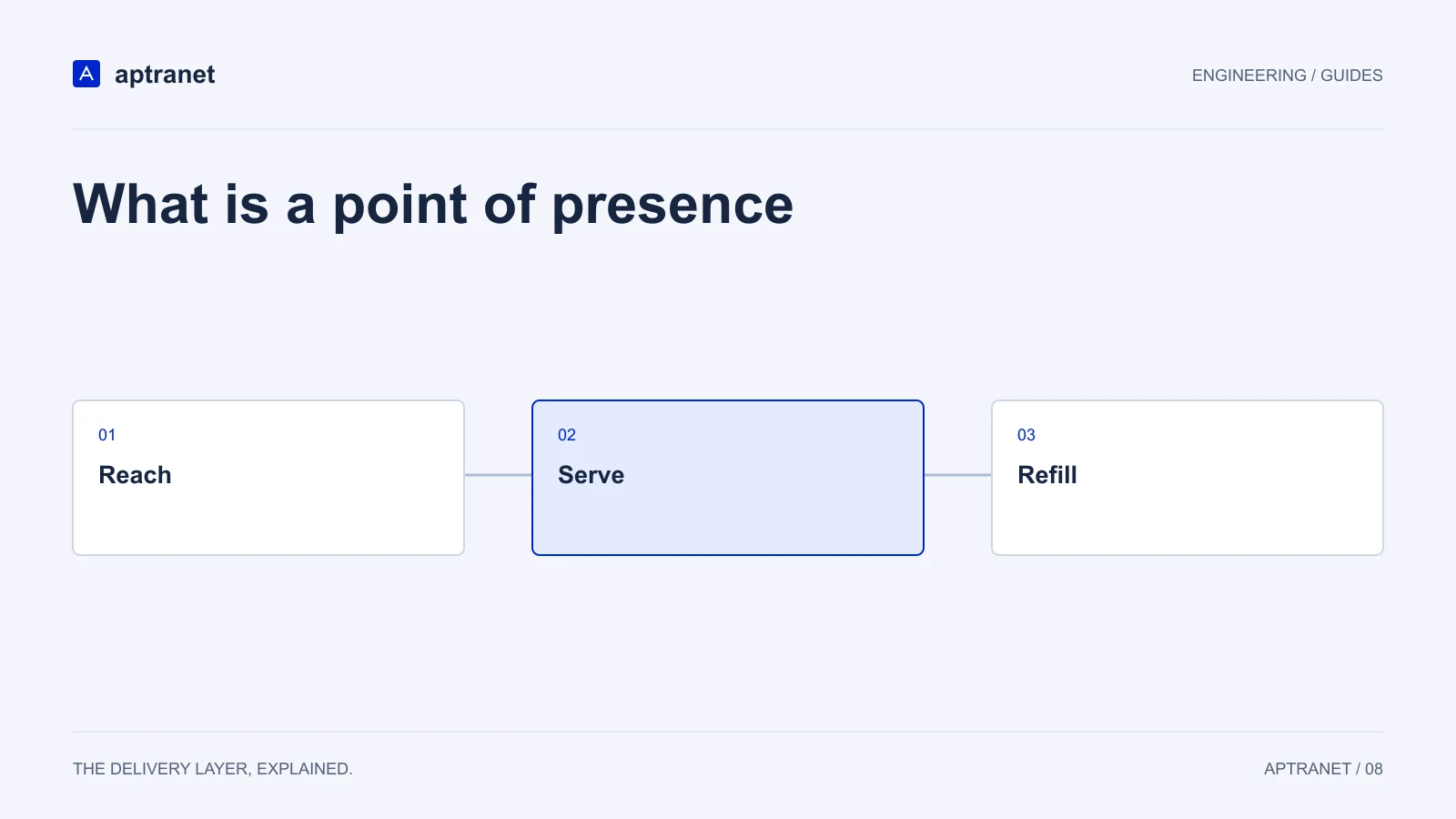
What is a point of presence (PoP) in a CDN?
A point of presence is useful when its network path, capacity, and cache behavior suit your users; location count alone cannot establish that.
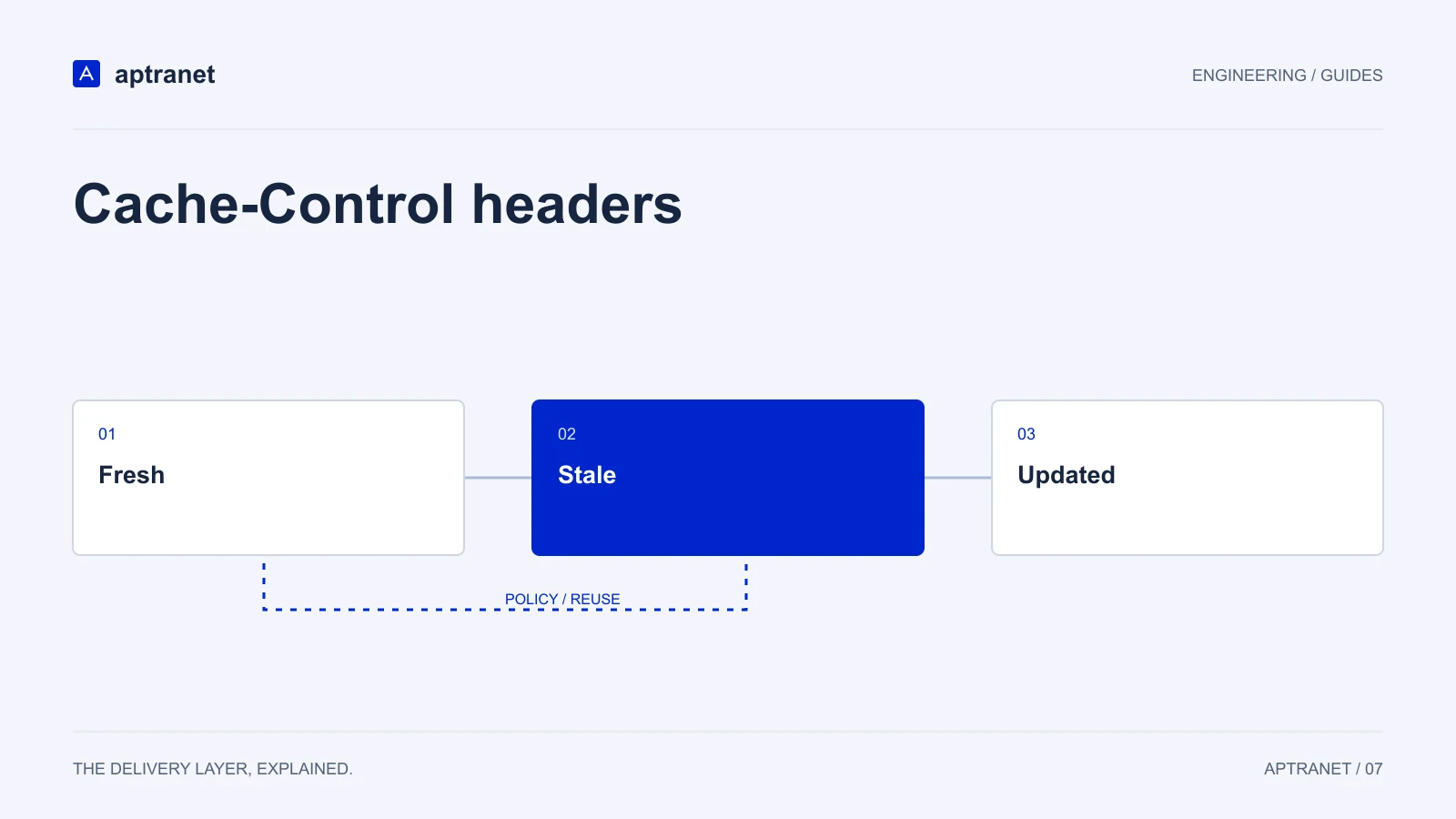
Cache-Control: give every response a deliberate lifetime
Use public, private, no-store, max-age, and s-maxage correctly, with concrete response examples and a safe validation checklist.
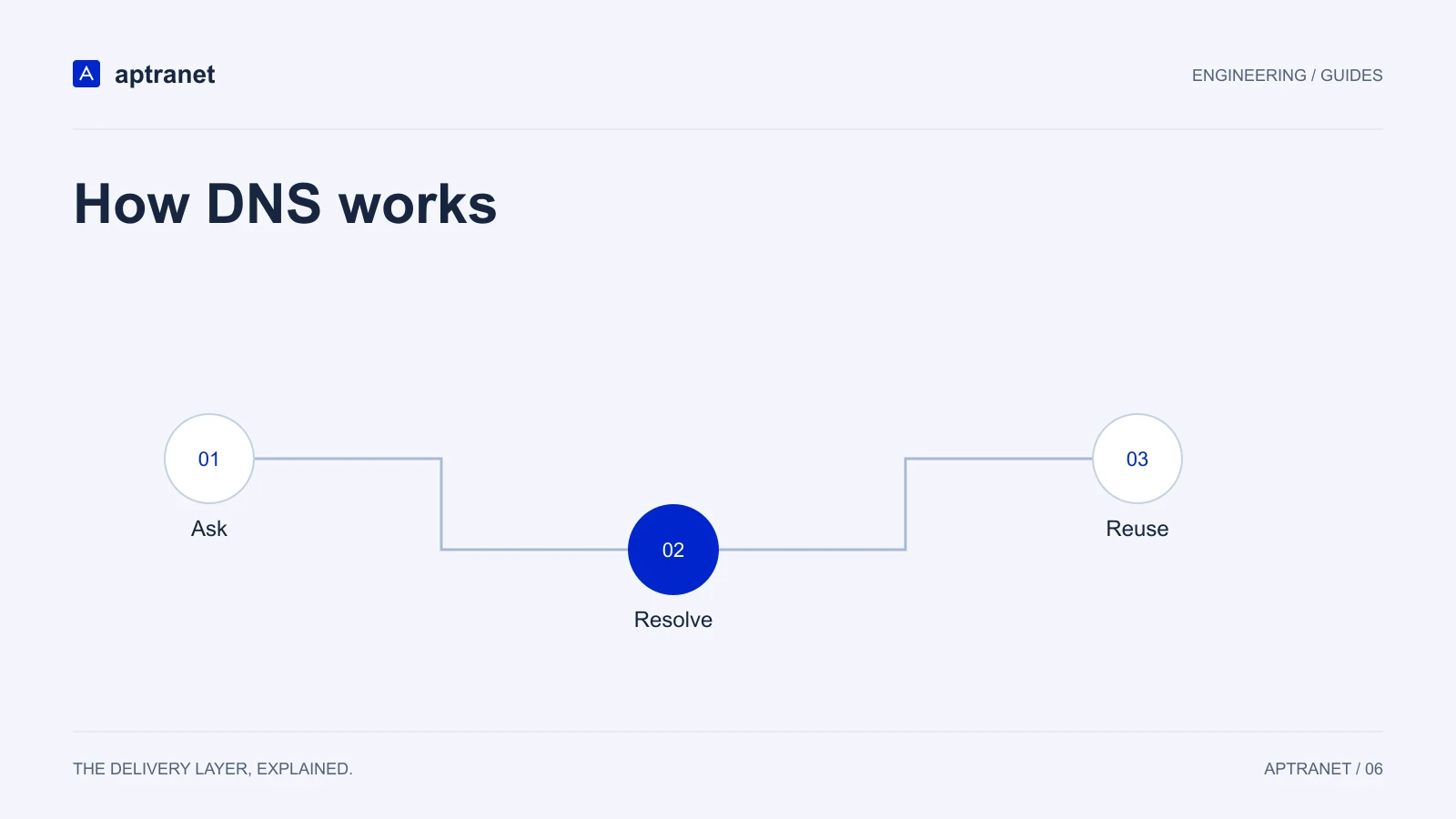
How DNS works, from resolver to authoritative answer
A DNS lookup is usually served from a resolver cache; a cold lookup follows delegations until it reaches the relevant authority.
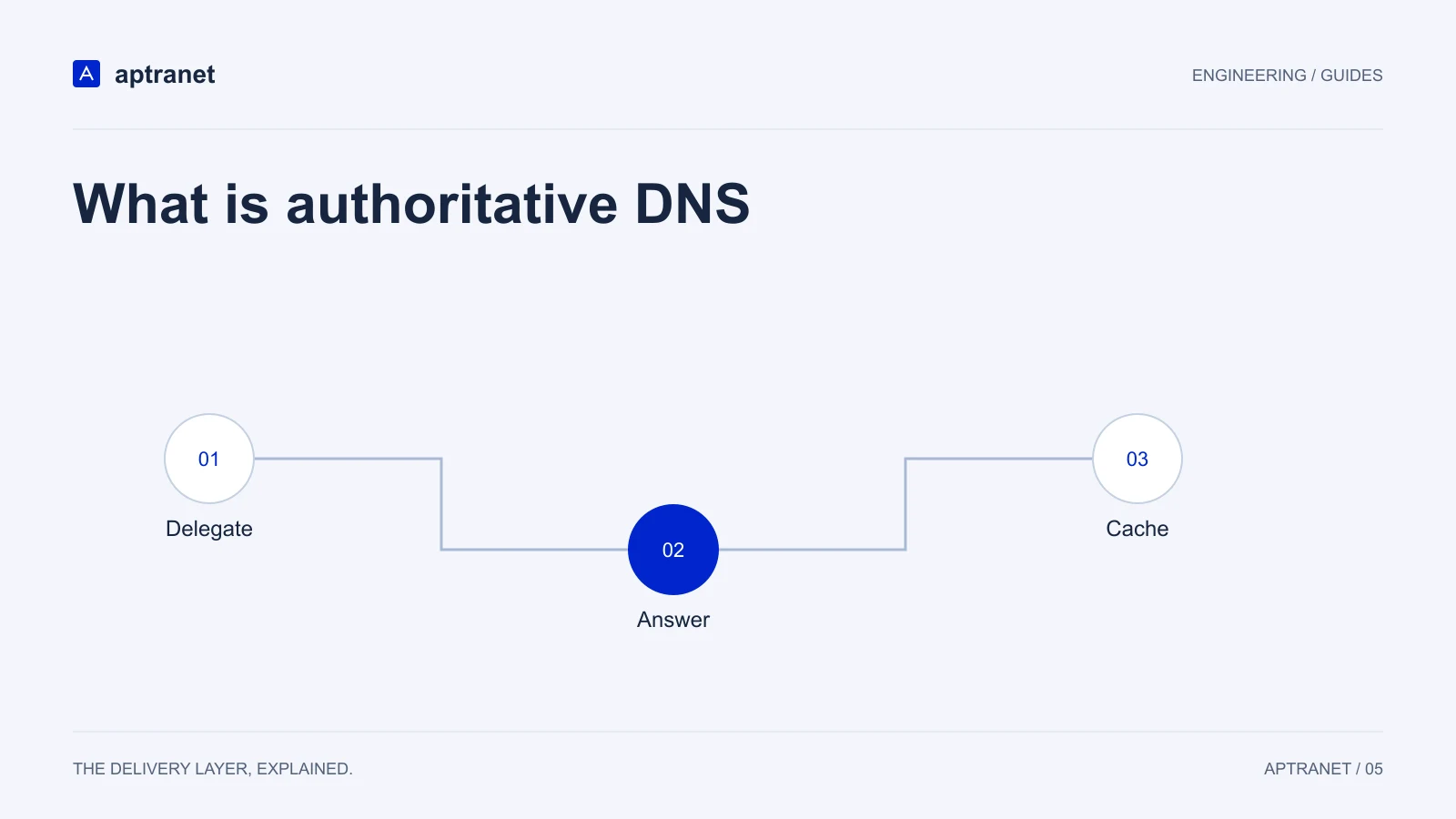
What is authoritative DNS?
Authoritative DNS publishes your zone’s answers; recursive resolvers find and cache those answers for clients.
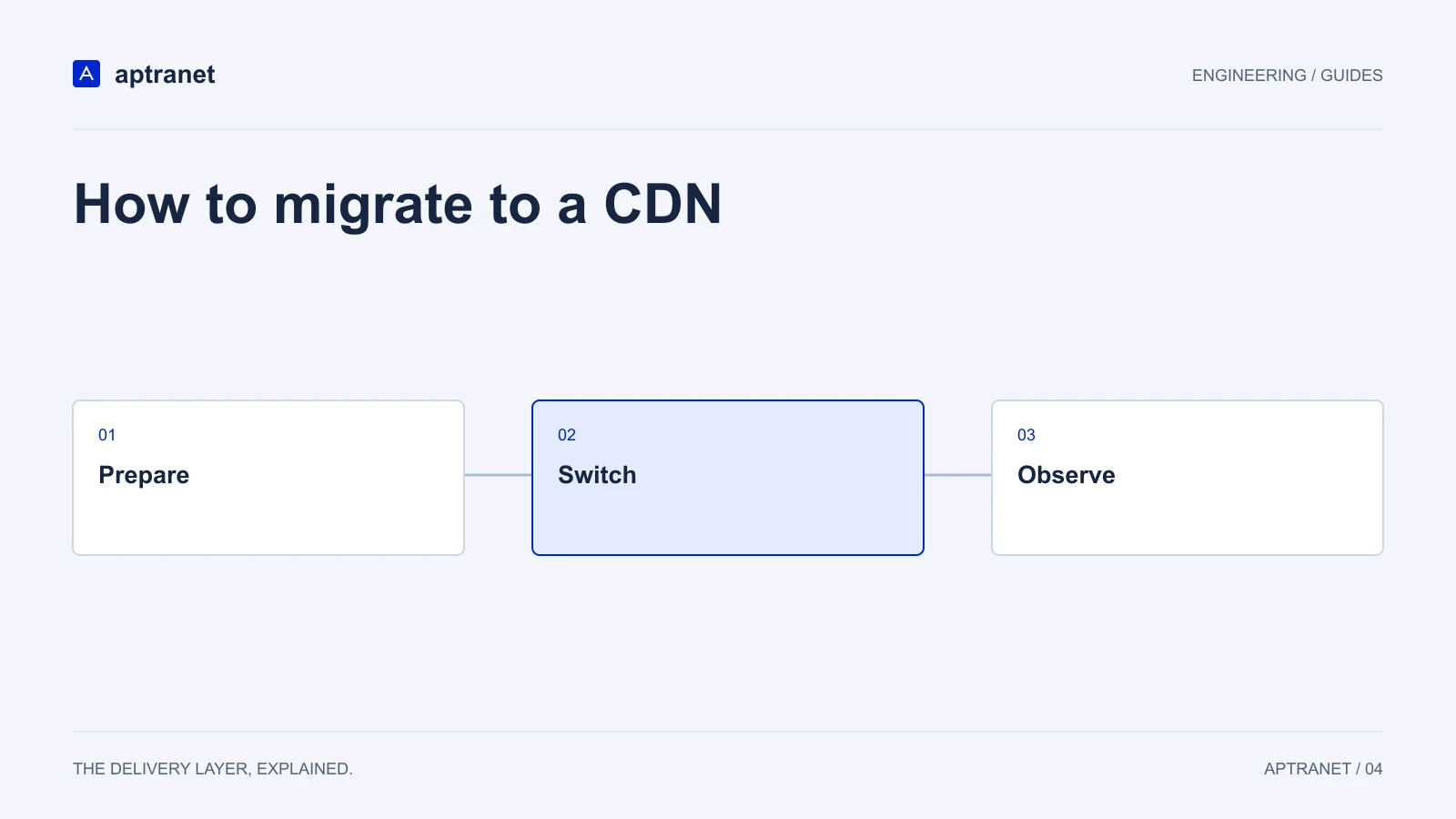
How to migrate to a CDN without downtime
Migrate to Cloud CDN without downtime: connect the origin, validate on a test hostname, lower DNS TTLs, then cut over the production domain.
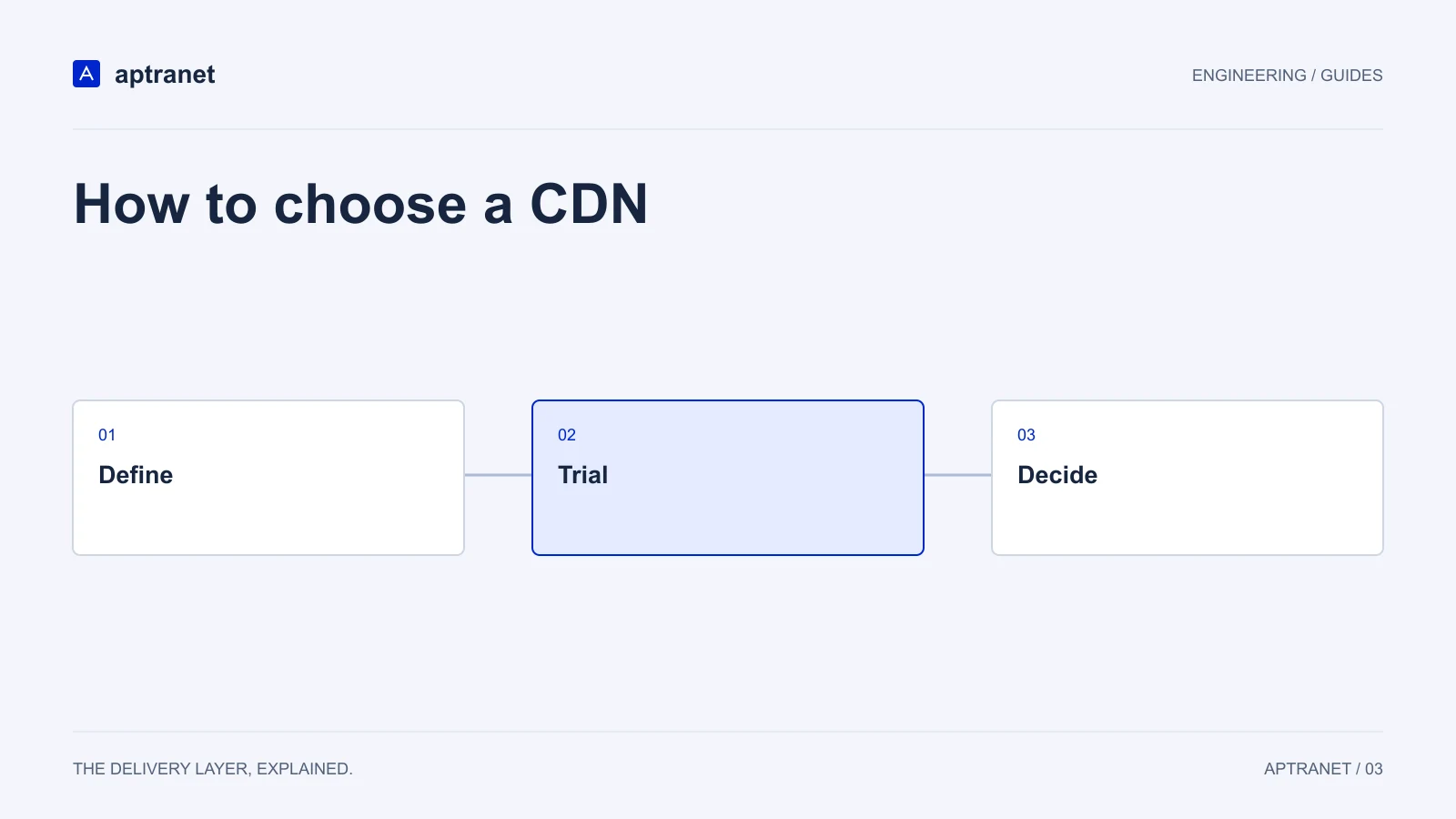
How to choose a CDN: a practical checklist
What to evaluate in a CDN: PoP footprint, cache control, Origin Shield, HTTP/3, image and video delivery, DNS cutover and origin protection.
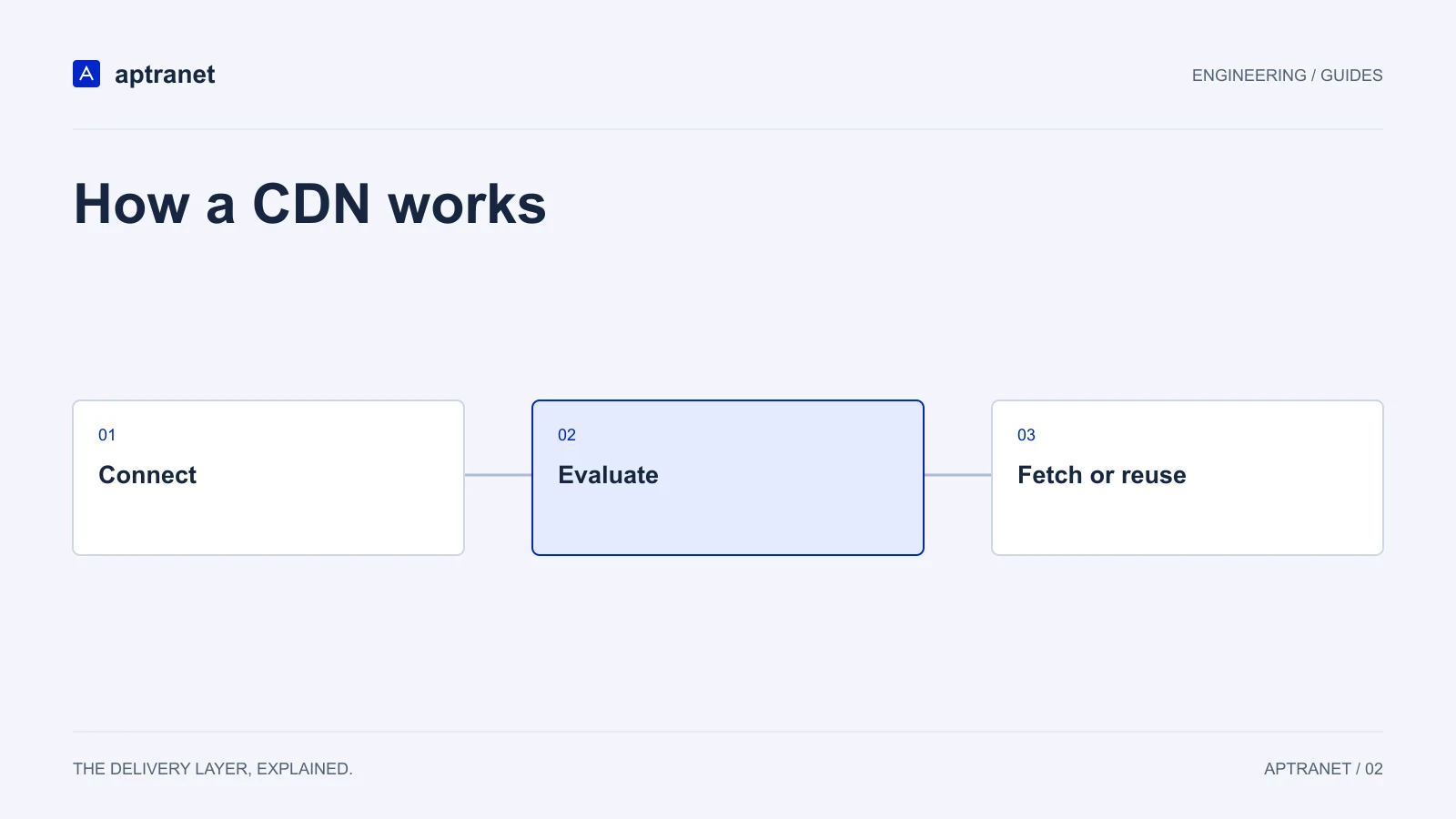
How a CDN works: request path, cache hits and origin misses
Walk through a Cloud CDN request: Anycast to a nearby PoP, cache lookup, Origin Shield on a miss, and purge when the source changes.
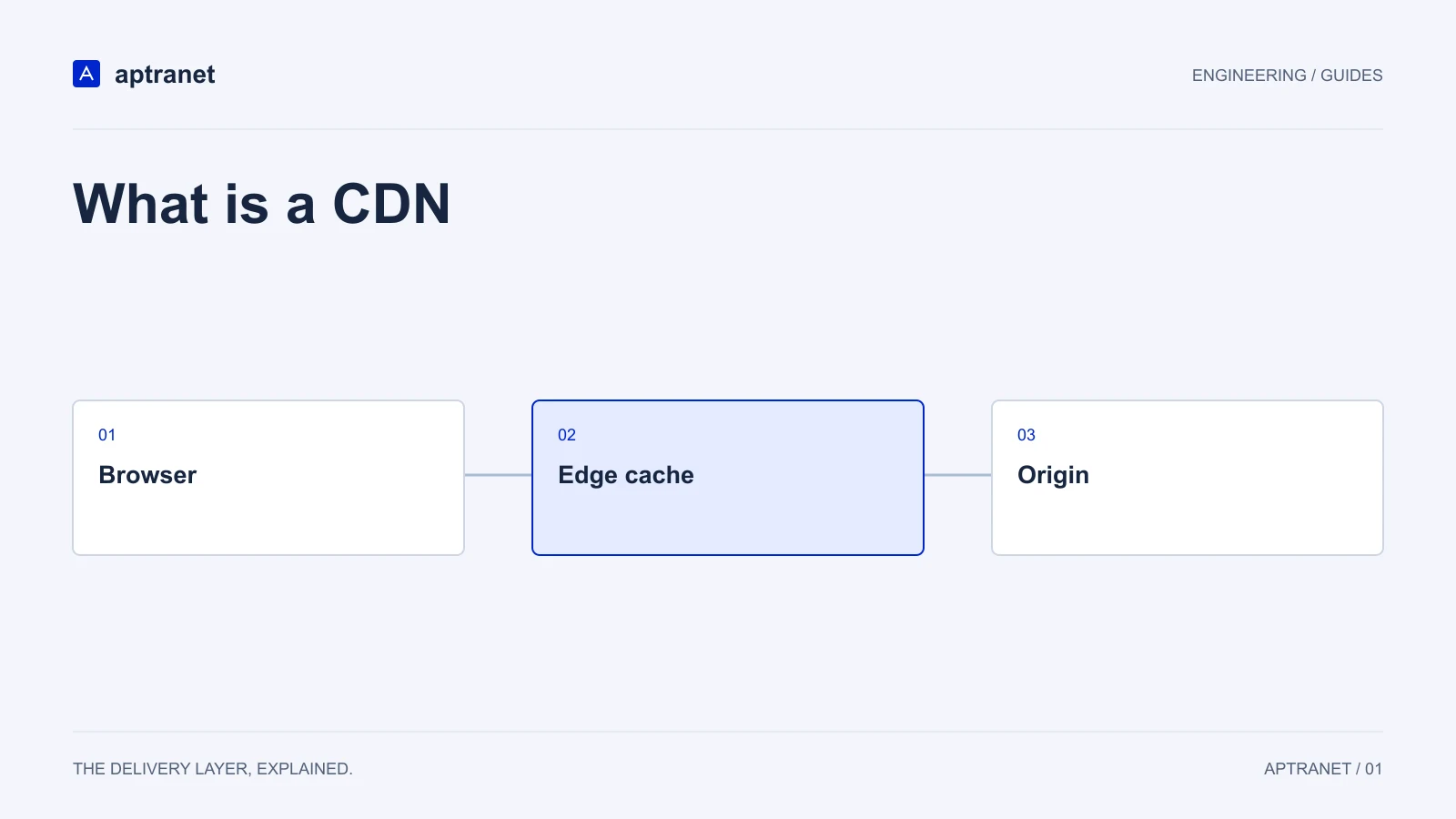
What a CDN actually does to a request
Follow a request from the browser to the edge and origin. Learn where a CDN helps, what stays uncached, and how to validate the setup.