
The Aptranet blog
Performance.
Guides and explainers on performance for teams running Cloud CDN and Cloud DNS.
Editor's pick Performance
Fast at home. Slow everywhere else. Here’s how to investigate.
Build a regional performance test that separates network latency, cache behavior, and browser work—then fix the part your visitors actually wait for.
Read the storyExplore the library
Follow via RSS6 articles
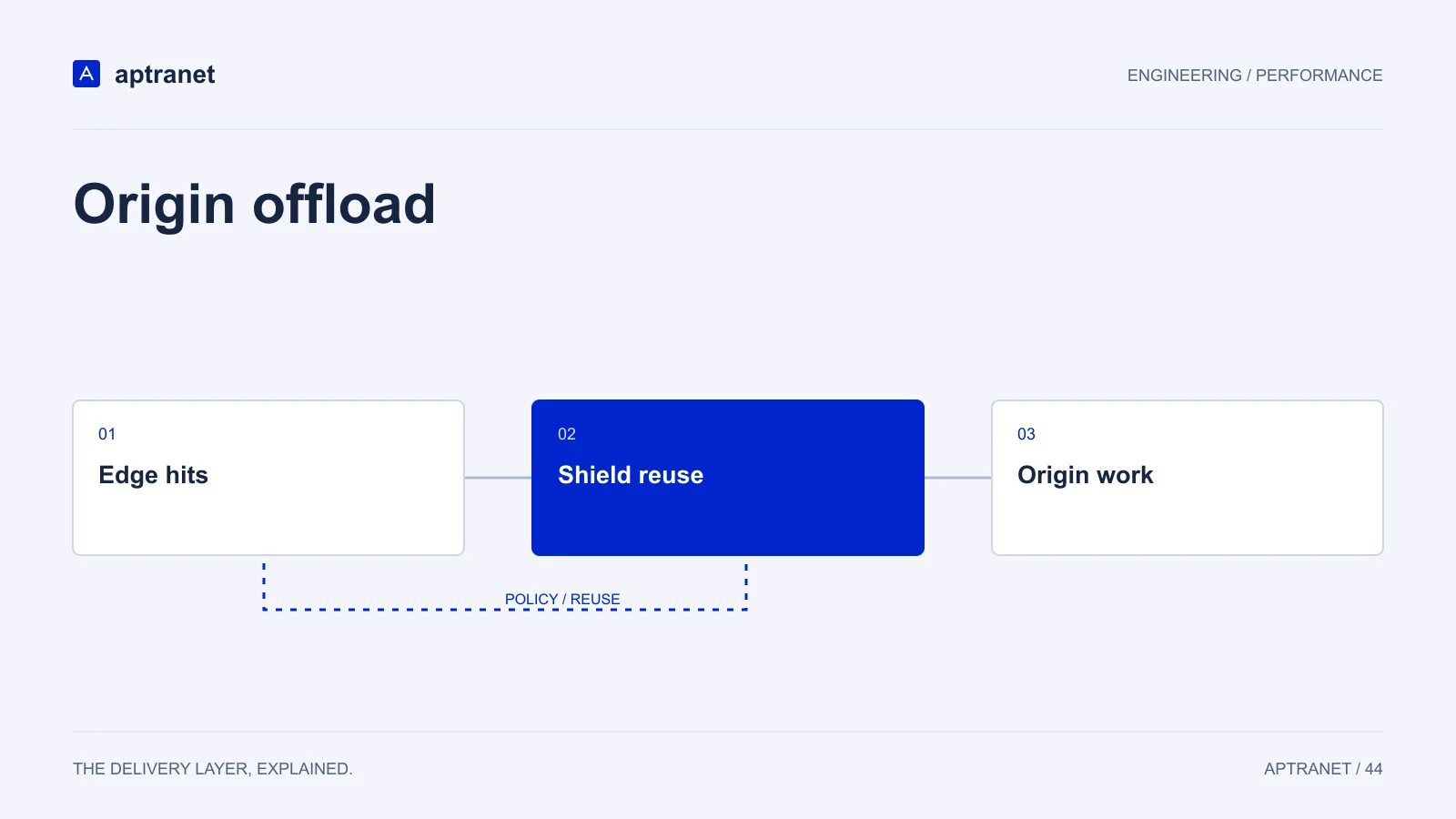
Origin offload: keep PHP, Node and storage off the public path
Origin offload is cache hit ratio plus Shield plus hiding the origin IP. How Cloud CDN reduces worker and bandwidth cost.
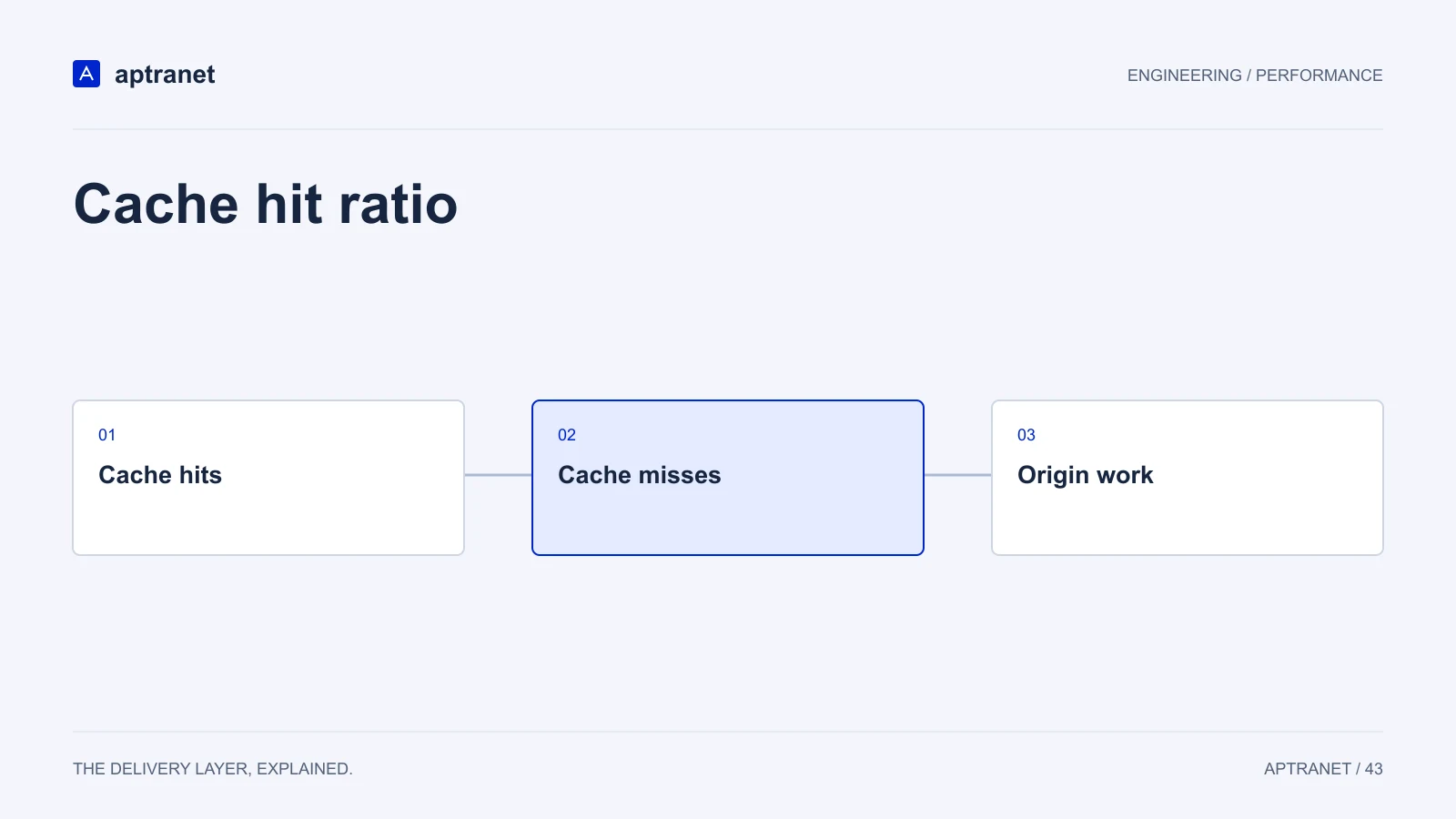
Cache hit ratio: useful signal, incomplete picture
Calculate request hit ratio and byte offload, identify cache-key fragmentation, and improve reuse without caching private responses.
Fast at home. Slow everywhere else. Here’s how to investigate.
Build a regional performance test that separates network latency, cache behavior, and browser work—then fix the part your visitors actually wait for.
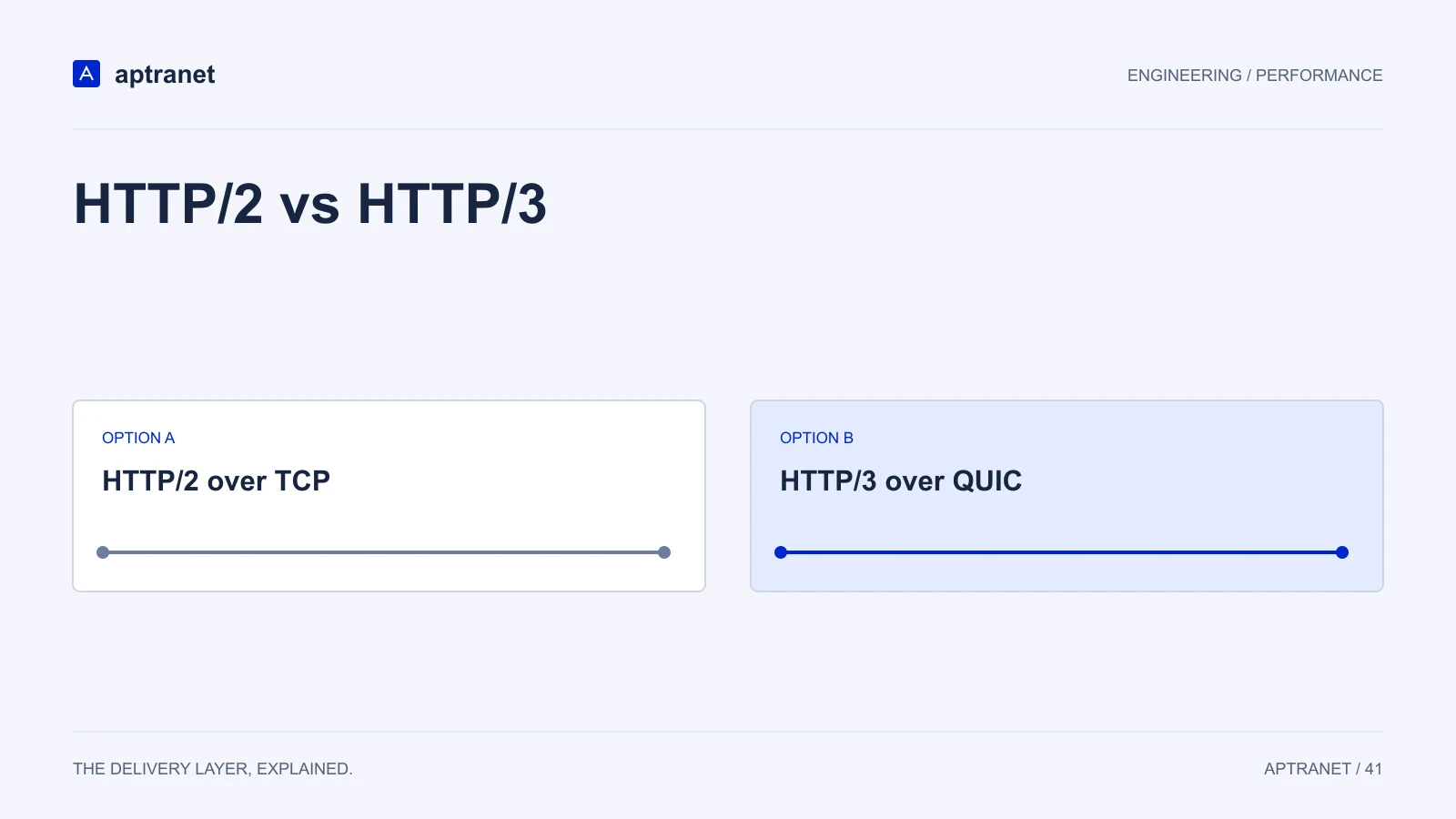
HTTP/2 vs HTTP/3: what actually changes on a CDN
HTTP/2 multiplexes over TCP. HTTP/3 uses QUIC. Cloud CDN offers both, with HTTP/2 as fallback when UDP is blocked.
Brotli vs Gzip: what a CDN should compress
Brotli typically beats Gzip on HTML, CSS, JS and JSON. Cloud CDN negotiates encoding at the edge and leaves media binaries alone.
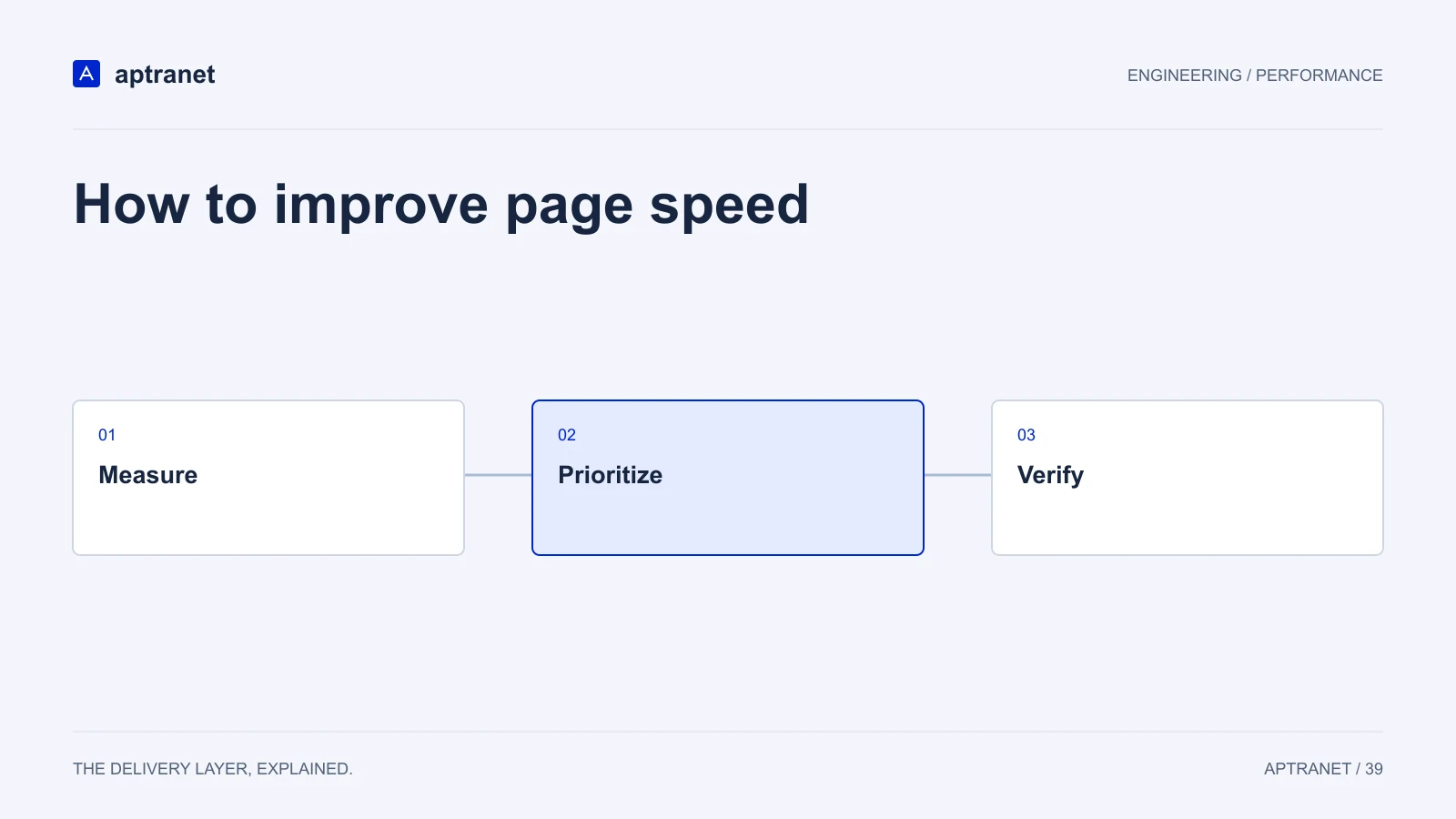
How to improve page speed with cache, images and HTTP/3
Page speed for global users is cache, image weight, fonts and handshake. What Cloud CDN changes, and what still belongs in the application.