A CDN can reduce delivery delay, but LCP, INP, and CLS measure different aspects of the user experience.
LCP is a delivery problem first
The LCP element may be a hero image or a large text block. Safe HTML caching and correctly sized images can reduce delivery delay, but resource discovery and rendering can remain on the critical path.
Self-host fonts on the same CDN hostname to avoid a third-party font round trip. See CDN for web fonts.
The delivery model
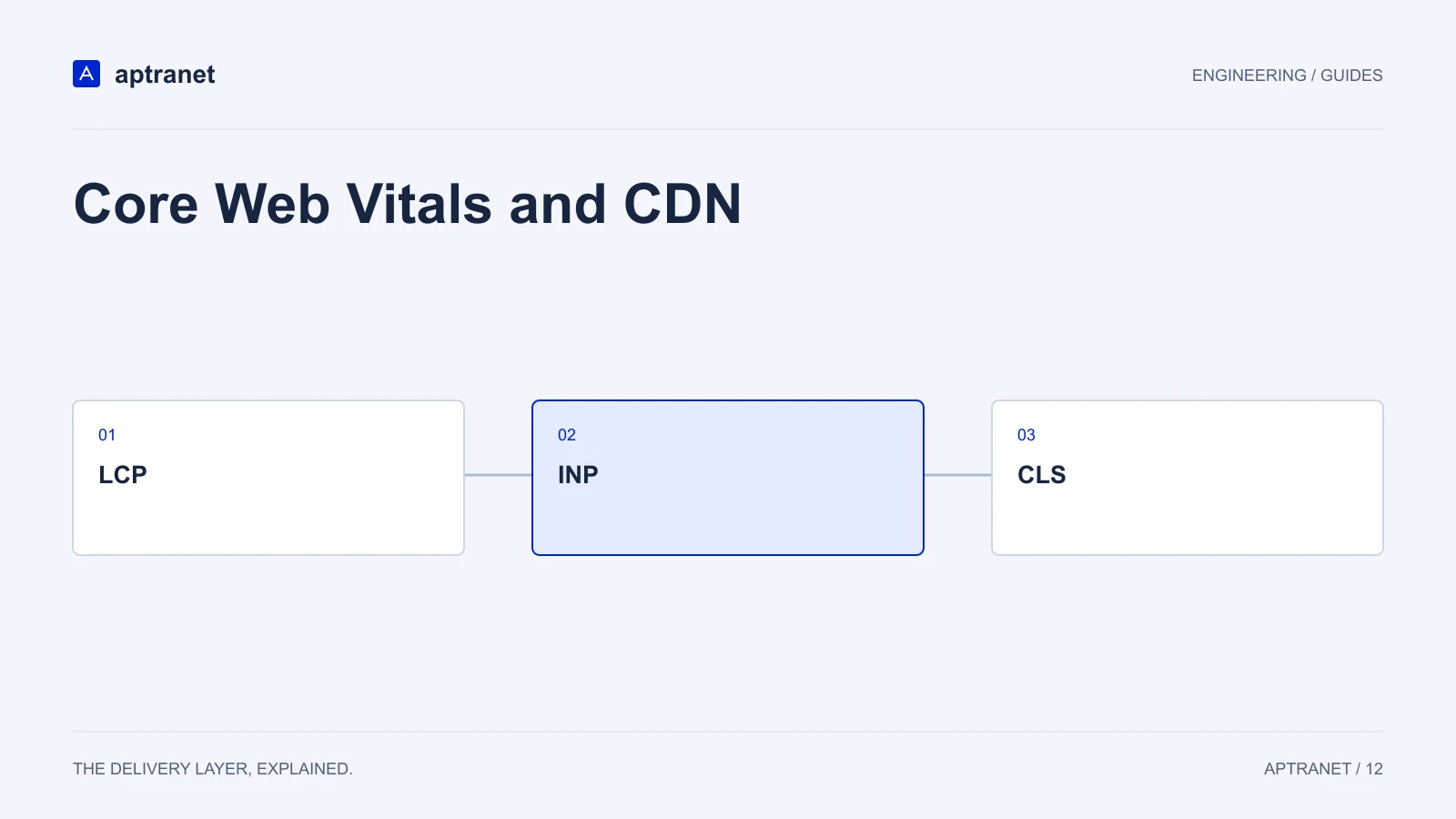
Core Web Vitals and CDN
- 01LCPWhen the largest visible content is rendered.
- 02INPHow responsively the page handles interactions.
- 03CLSHow much visible content shifts unexpectedly.
INP is mostly your JavaScript
Interaction to Next Paint cares about main-thread work. A CDN will not make a 400 kB framework cheaper. It will make the script arrive faster over HTTP/3 from a nearby PoP so parse can start earlier.
Do not expect Cloud CDN to replace code splitting. Do expect hashed bundles to be long-cached worldwide.
CLS and images without dimensions
If you resize at the edge, still reserve space in the layout. A fast image that pops in late still fails CLS.
Use width and height (or aspect-ratio) that match the transformed geometry you request.
Measure from the markets you sell to
Use field data from the markets and devices your audience actually uses. A lab near the origin can miss regional network and device constraints.
Pair the CDN with Anycast DNS so the lookup is not the hidden vital.
Validate before production
Use field measurements by device and region, then inspect a representative lab trace. If LCP remains slow after delivery improves, check resource discovery and rendering. Profile long main-thread tasks for interaction delays and reserve image space for layout stability.
- Record the configuration and expected result before changing traffic.
- Keep evidence of the test and a working rollback for the previous behavior.