Treat a CDN migration as a change to traffic routing, cache policy, and certificates, with a tested rollback for each.
Leave production DNS alone until the last step
Create a Cloud CDN distribution that pulls your existing origin over HTTPS. Confirm assets, HTML and a login or checkout flow on an Aptranet hostname. Do not change the customer-facing name yet.
This is the rehearsal. Certificates, cache bypasses and origin TLS get fixed here, not during a live TTL window.
The delivery model
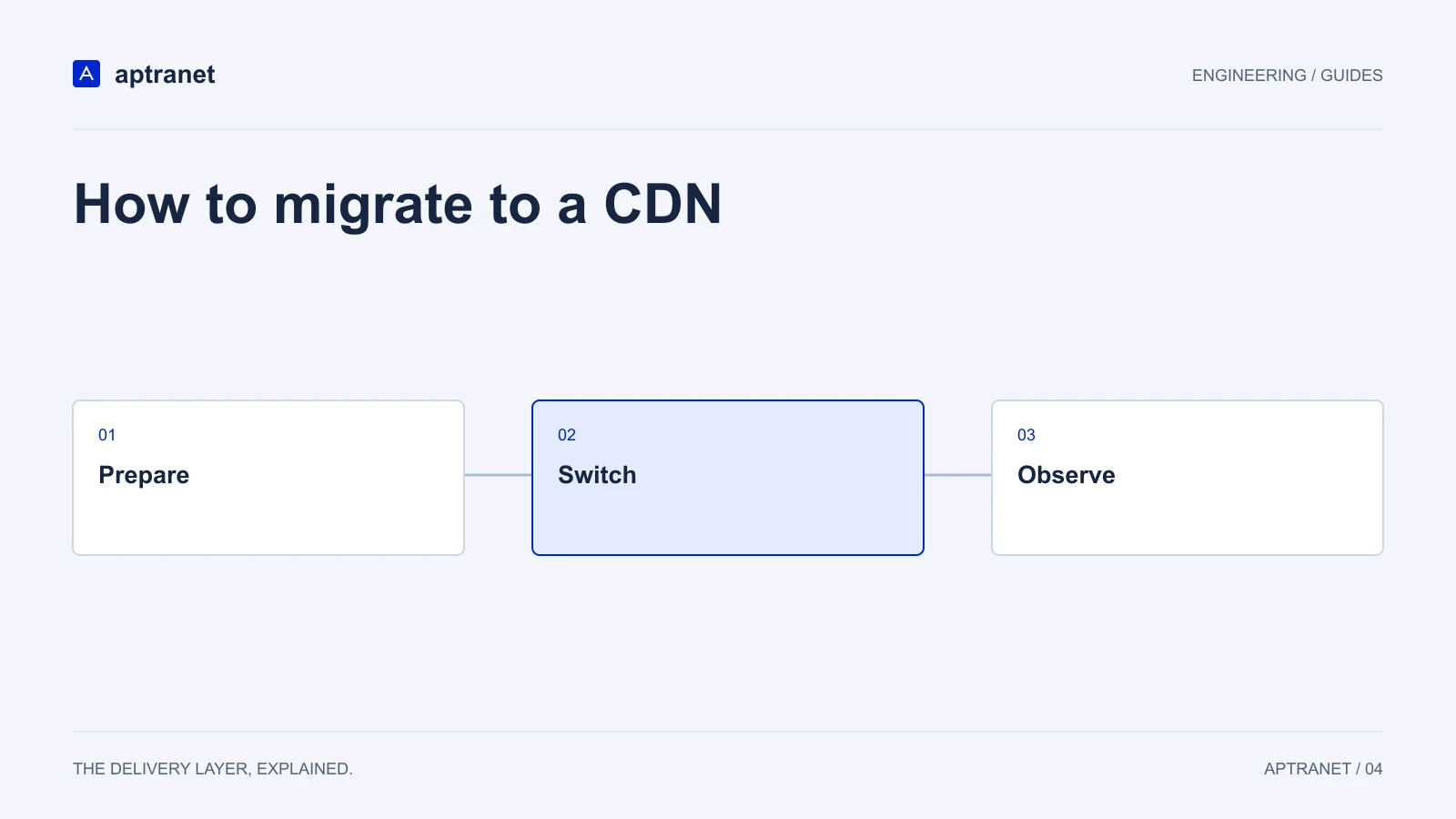
How to migrate to a CDN
- 01PrepareValidate TLS, origin access, and bypass rules.
- 02SwitchChange DNS after the previous TTL window.
- 03ObserveKeep the old path ready while traffic converges.
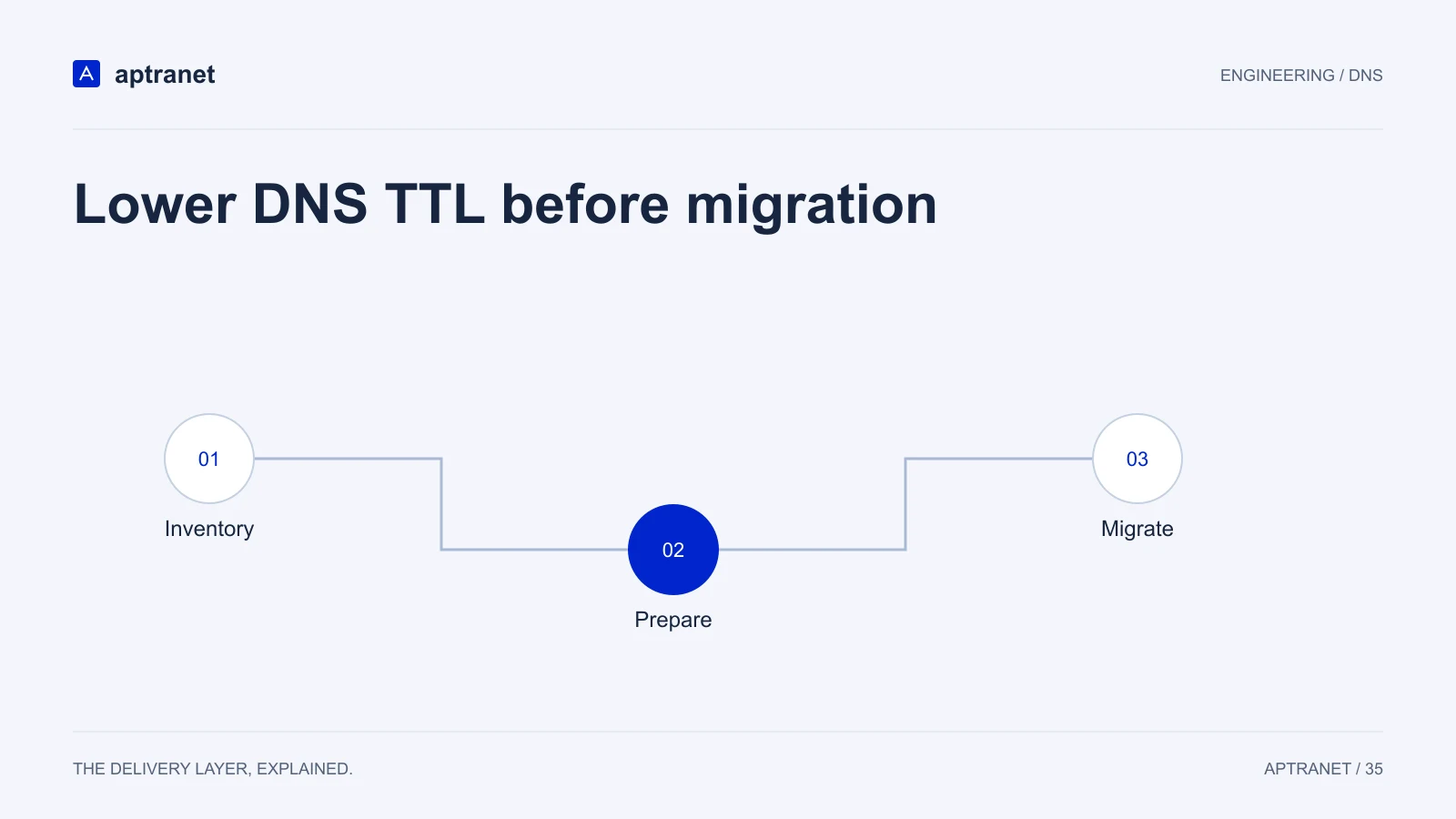
Lower TTLs days before the cutover
Lower the relevant TTLs early enough for the previous lifetime to expire. A short newly published value does not shorten answers that resolvers already cached. Keep both destinations available during convergence.
Keep MX and verification TXT untouched. You are moving the website name, not mail.
Restrict the origin as you cut over
Once the public hostname points at Cloud CDN, clients should not be able to skip the edge. Restrict origin access and validate origin TLS so the old IP is not a back door.
Watch hit ratio and origin bandwidth for the first hours. Prefetch if a campaign starts the same day.
Have a rollback that is also DNS
Rollback is pointing the name back, plus a TTL that is still low. If you raised TTL immediately after cutover, you have closed the door.
Raise TTLs only when the distribution has been validated for a while.
Validate before production
Run the complete login or checkout journey on the test path, including redirects and cookies. Lower relevant DNS TTLs in advance. Keep the prior origin configuration available until error rates and regional tests remain stable.
- Record the configuration and expected result before changing traffic.
- Keep evidence of the test and a working rollback for the previous behavior.