
The Aptranet blog
Cloud DNS.
Guides and explainers on cloud dns for teams running Cloud CDN and Cloud DNS.
Editor's pick Cloud DNS
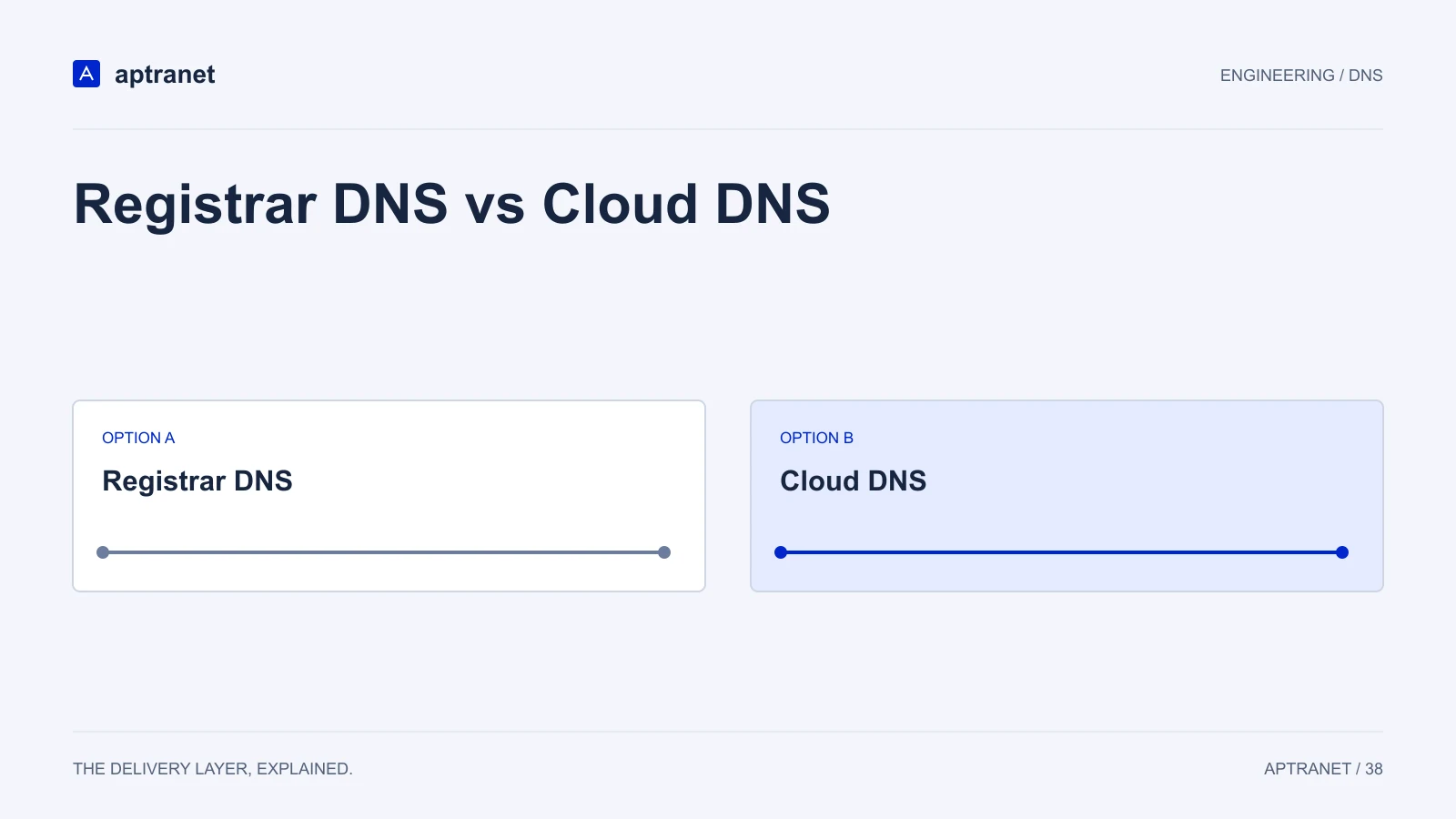
Registrar DNS vs Cloud DNS: when the default becomes the outage
Registrar DNS is fine for a parked domain. Production shops and APIs need Anycast, health checks, flattening and low TTLs on Cloud DNS.
Read the storyExplore the library
Follow via RSS12 articles
Registrar DNS vs Cloud DNS: when the default becomes the outage
Registrar DNS is fine for a parked domain. Production shops and APIs need Anycast, health checks, flattening and low TTLs on Cloud DNS.
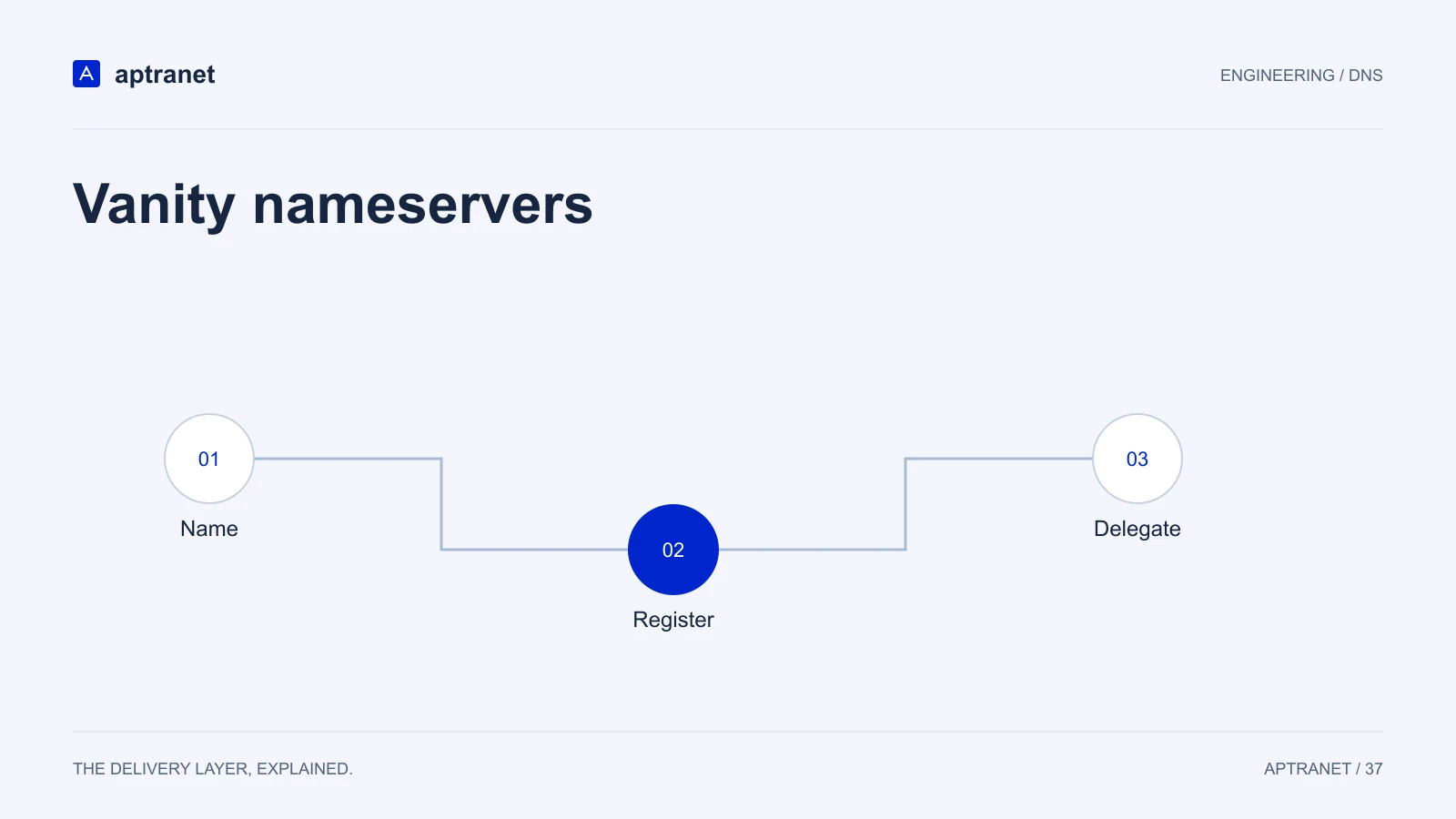
Vanity nameservers: branded NS on Anycast DNS
Present ns1.example.com while Cloud DNS Anycast still answers. Glue, DNSSEC and why most zones do not need vanity NS.
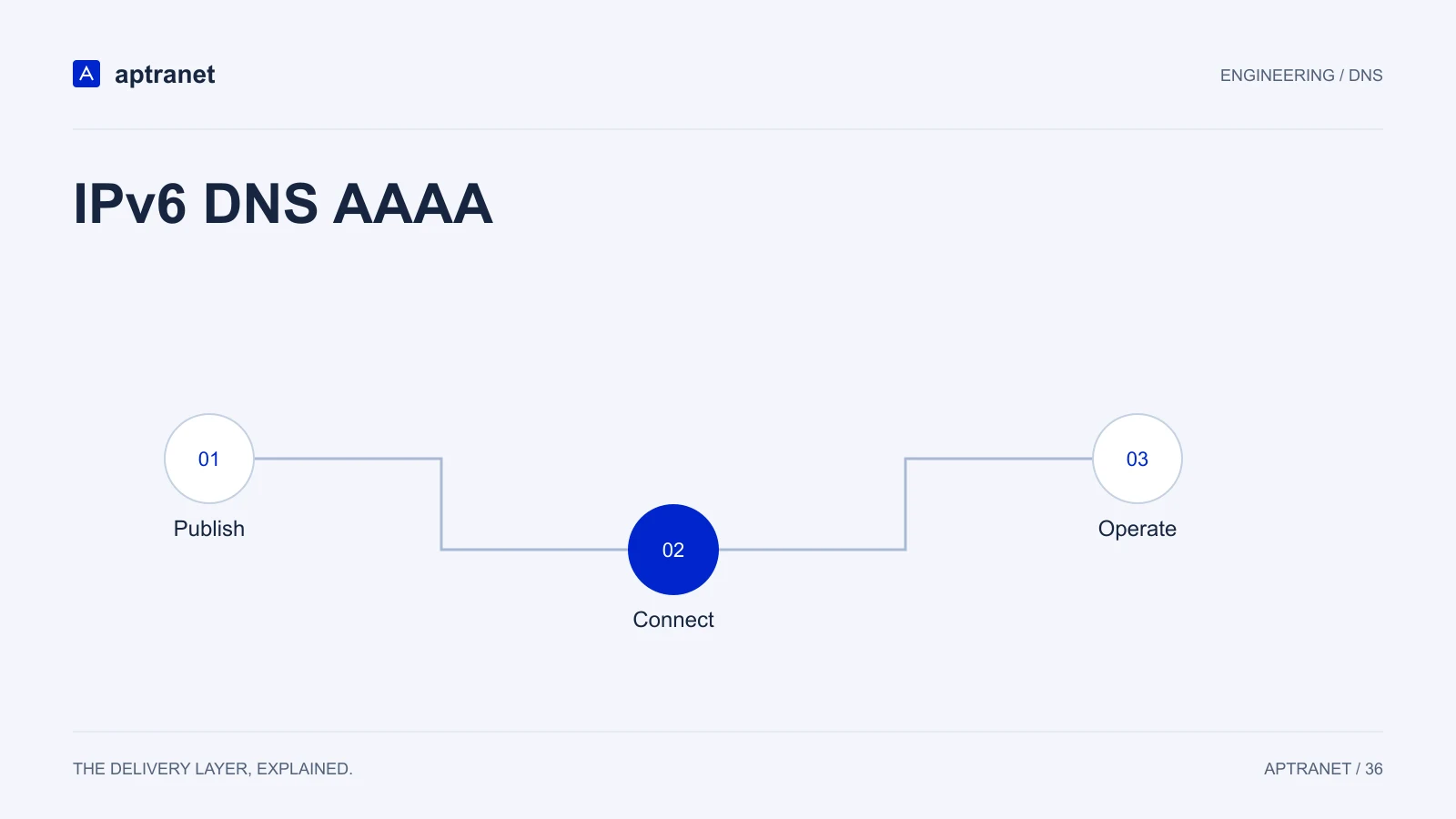
IPv6 DNS: publishing AAAA without lying
Publish AAAA only for endpoints that speak IPv6, serve authority over IPv6, and health-check both families on Cloud DNS.
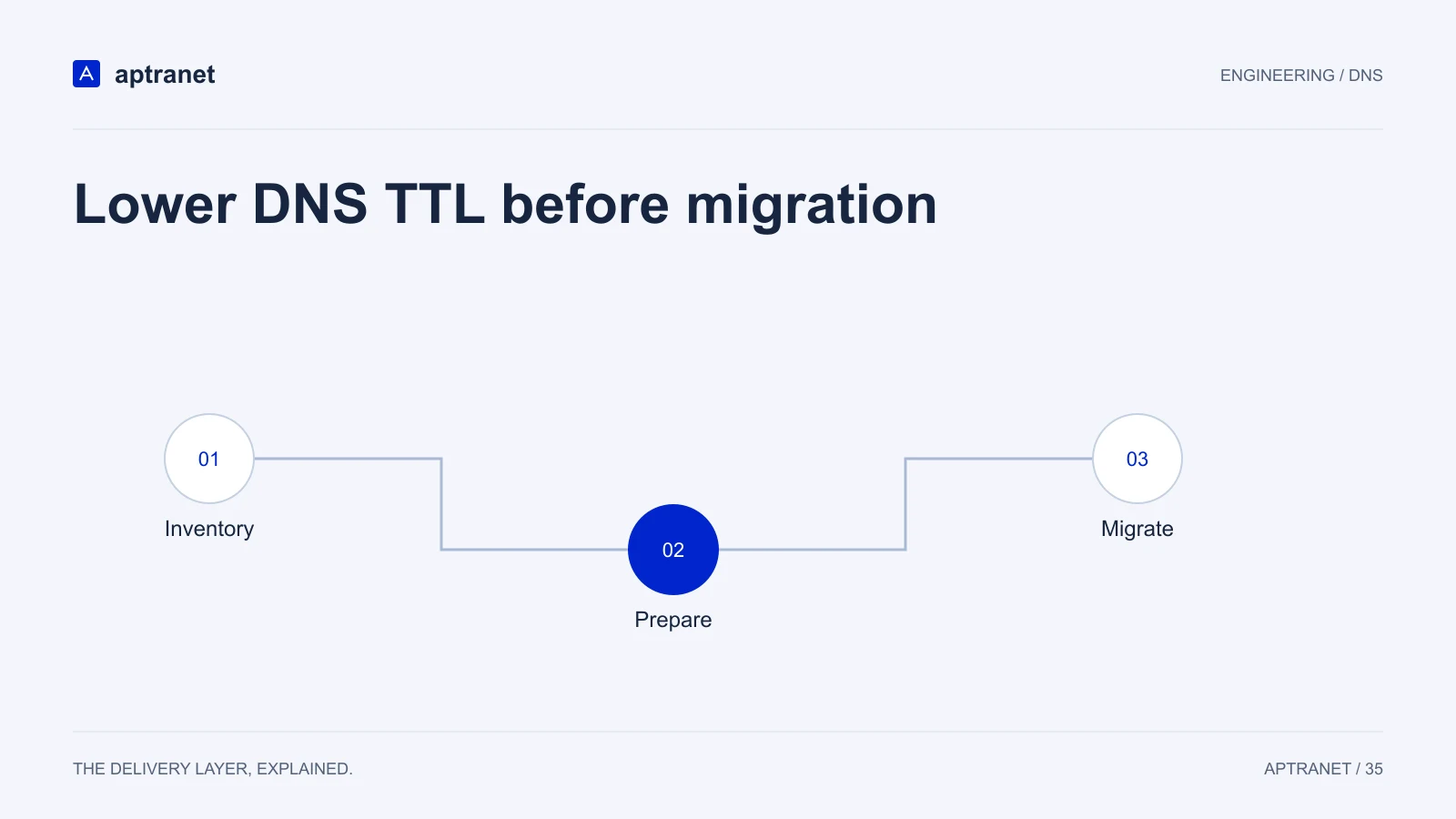
Lower DNS TTL before a migration — a checklist
Lower TTLs before a CDN or origin cutover, preserve mail records, and restore normal lifetimes after the new path is stable.
Weighted DNS load balancing and canaries
Use Cloud DNS weights and subnet load balancing to canary a pool, then raise traffic as it proves in, with health checks on every target.
DNS health checks: connect endpoint health to the record
Cloud DNS health checks monitor endpoints and remove them from eligible GeoDNS and weighted answers when they fail.
DNSSEC explained: signatures, trust, and safe changes
DNSSEC signs authoritative answers so validating resolvers can reject spoofed records. How it coexists with GeoDNS, Anycast and low TTLs on Cloud DNS.
CNAME flattening: how the apex can follow a hostname
CNAME flattening lets example.com alias a CDN or app hostname while MX and TXT remain at the apex. How Cloud DNS implements it.
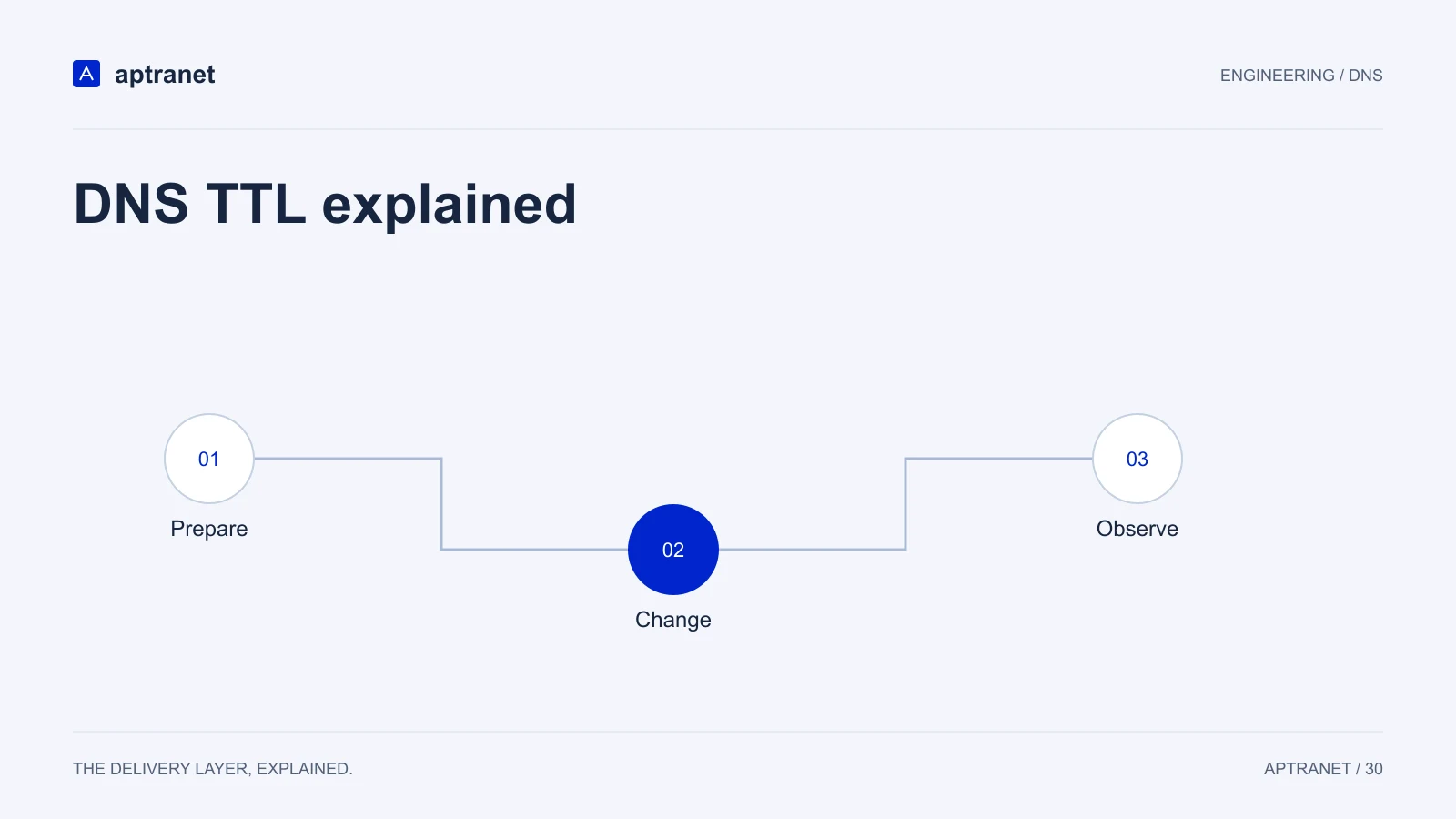
DNS TTL is a cache lifetime, not a failover promise
Understand what TTL controls, why lowering it takes time, and how to plan a DNS change with a realistic rollback window.
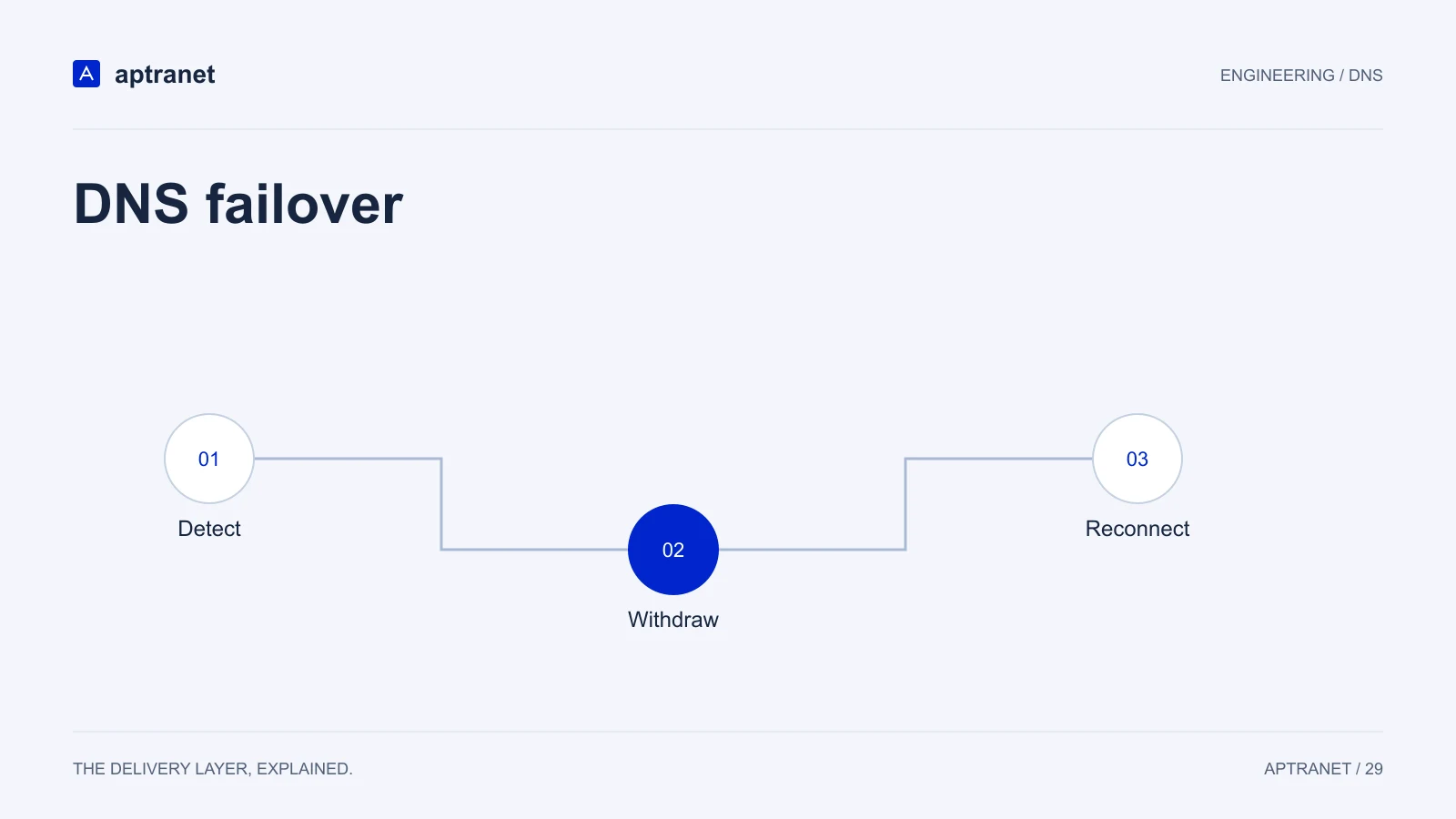
DNS failover: stop handing out dead endpoints
DNS failover changes future answers after health policy changes. Detection, cached answers, and client reconnection determine recovery.
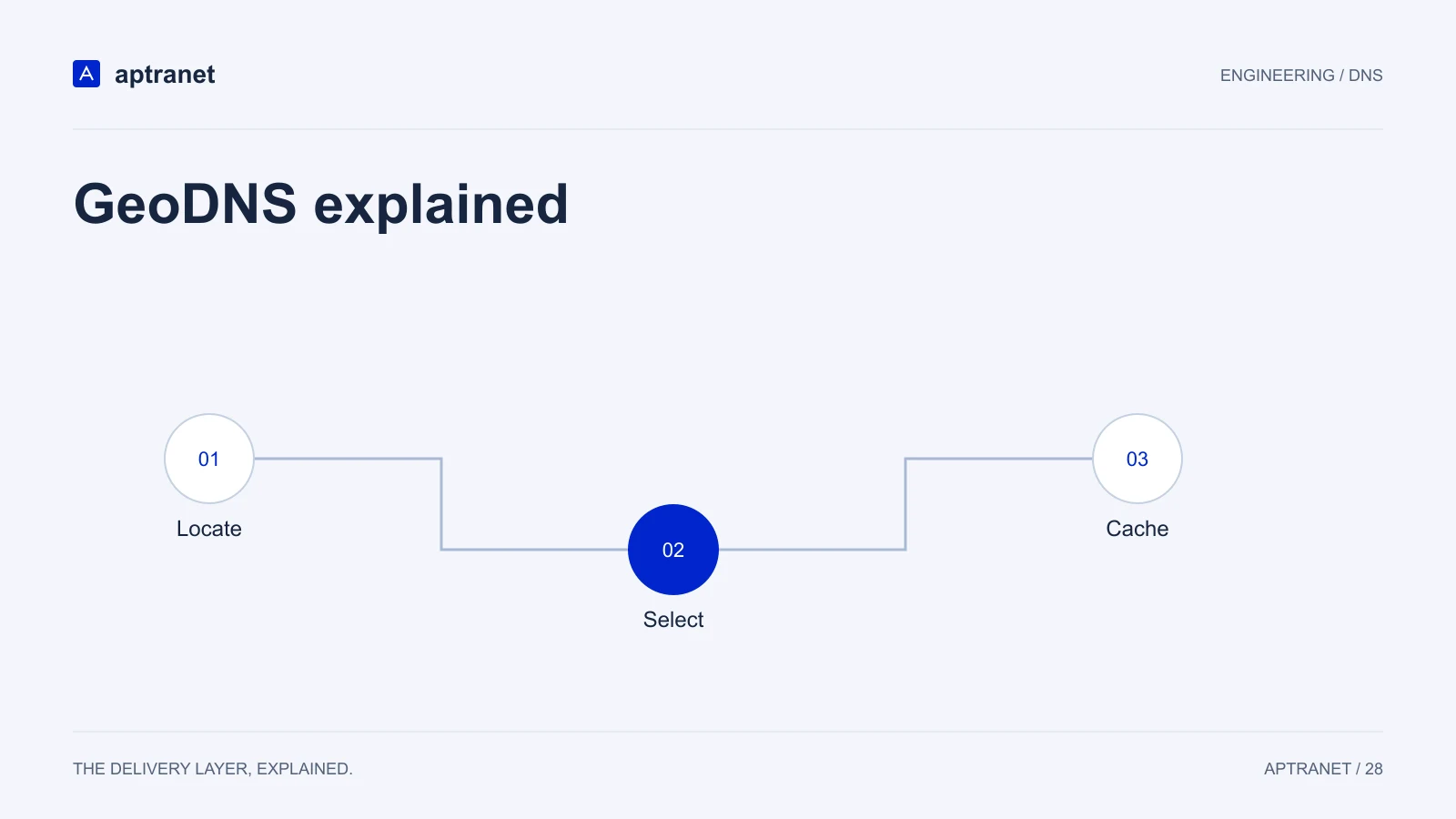
GeoDNS explained: steering by country, ASN and subnet
GeoDNS returns different records by location, ASN or subnet. How Cloud DNS steers resolvers — and why it sees the resolver, not the laptop.
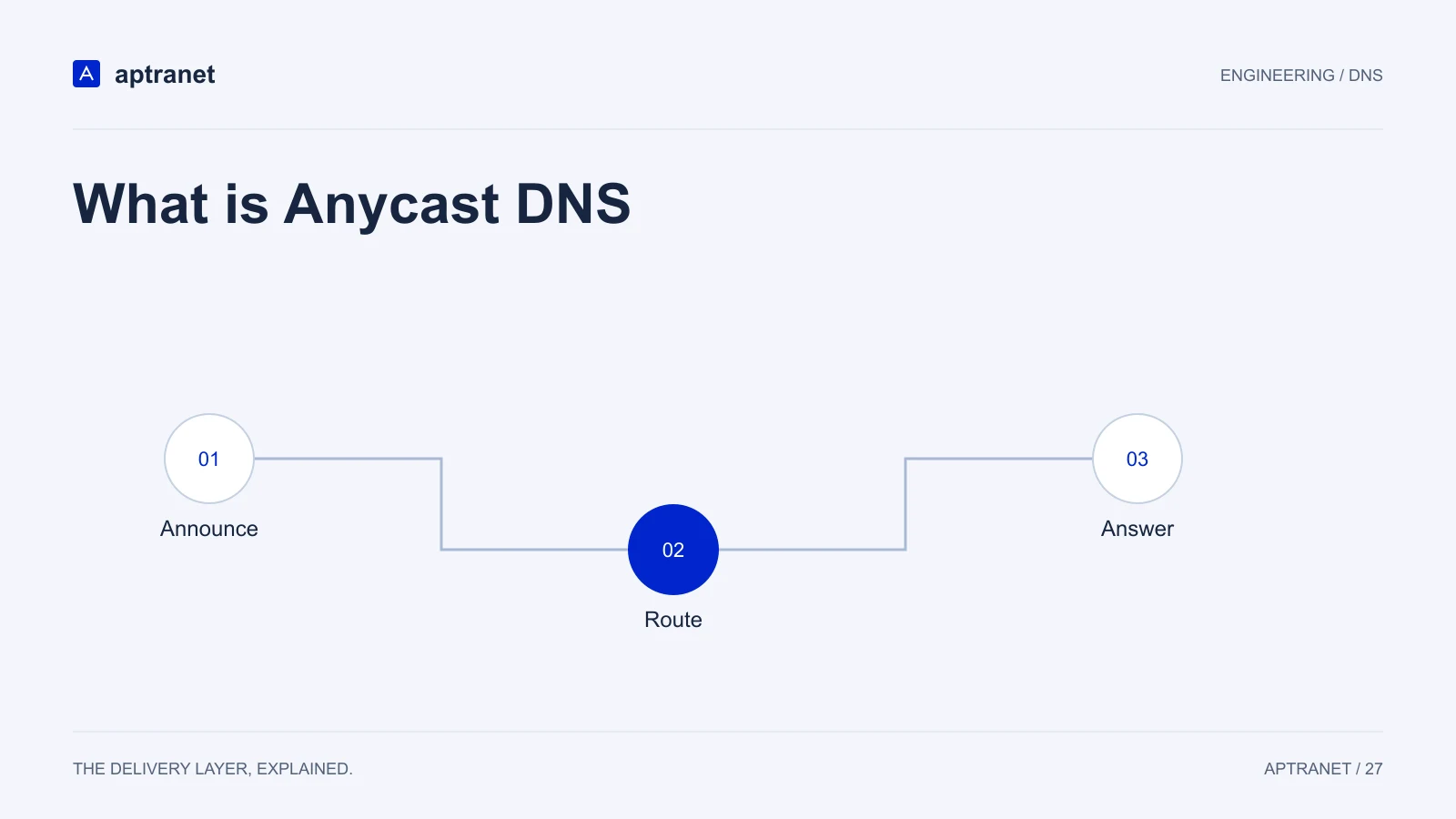
What is Anycast DNS?
Anycast advertises the same service address from multiple locations. Routing selects a path; it does not promise the geographically nearest server.