Anycast advertises the same service address from multiple locations. Routing selects a path; it does not promise the geographically nearest server.
The lookup should not have a region
If all authoritative endpoints depend on the same path or facility, one failure can affect them together. Anycast distributes the service address across locations; it still needs capacity planning, consistent zone data, and tested failure handling.
The delivery model
What is Anycast DNS
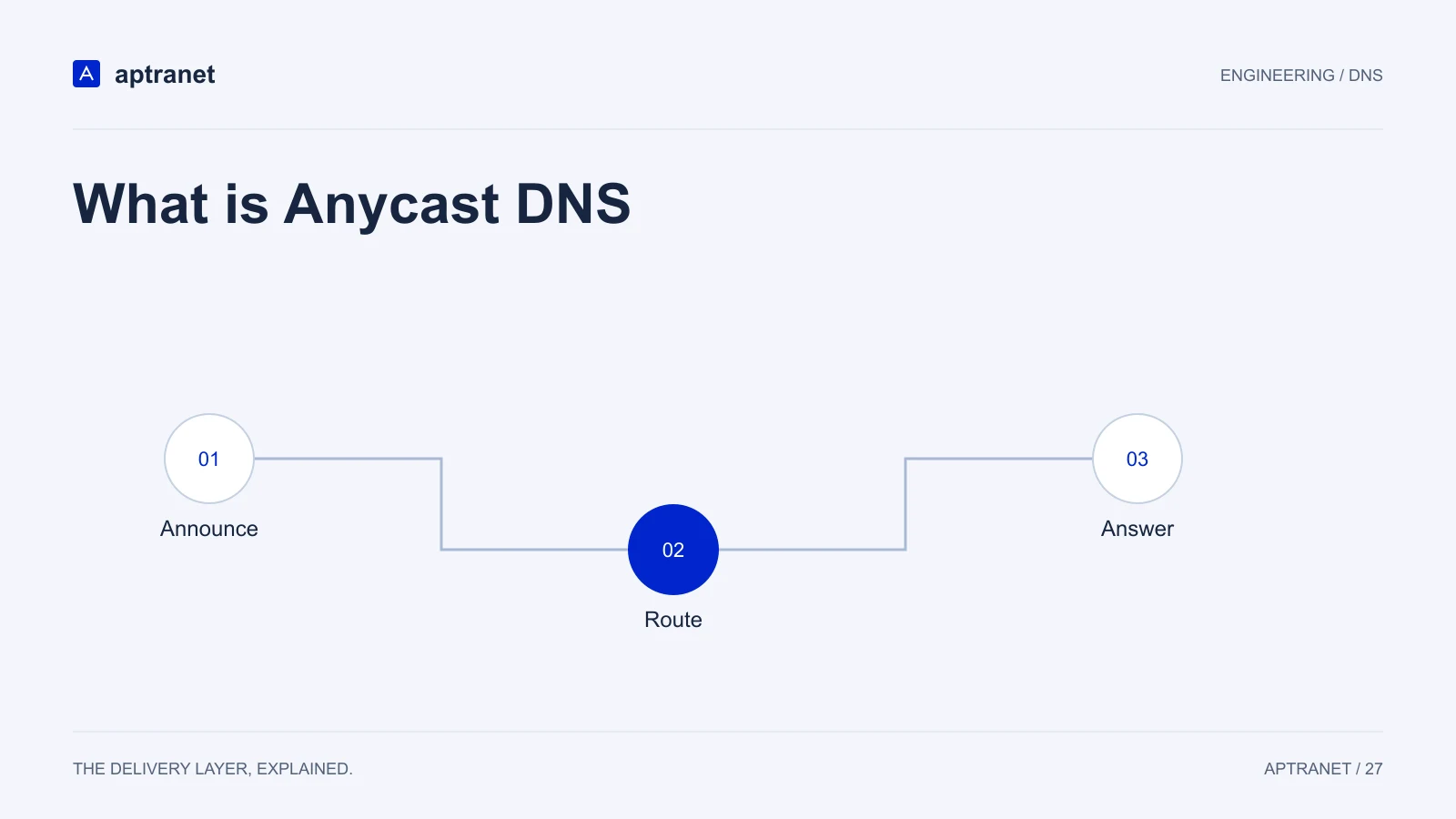
- 01AnnounceSeveral locations advertise the same service prefix.
- 02RouteNetwork policy selects a reachable announcement.
- 03AnswerA serving authority responds to the resolver.
DDoS is a DNS problem first
Attackers flood authority because it is a small target with a large blast radius. DDoS-protected Anycast is how the zone stays reachable when that happens.
Anycast does not replace records
You still enter A, AAAA, MX and CNAME. Anycast is how those answers are served. GeoDNS, weights and health checks still decide which answer a given resolver receives.
IPv6 and vanity NS
Authority should speak IPv6 as well as IPv4. Vanity nameservers can be branded while the same Anycast network answers underneath.
Validate before production
Measure authoritative query behavior from more than one network, including IPv4 and IPv6. Review failure handling and zone consistency with the provider. Two NS hostnames do not by themselves prove independent infrastructure.
- Record the configuration and expected result before changing traffic.
- Keep evidence of the test and a working rollback for the previous behavior.