A useful health check tests the service you are willing to send users to, with thresholds that avoid unstable routing.
Probe what you publish
Check the addresses you actually return, over the protocol that means up for that service — often HTTPS. Probing IPv4 only while publishing AAAA is how dual-stack surprises start.
The delivery model
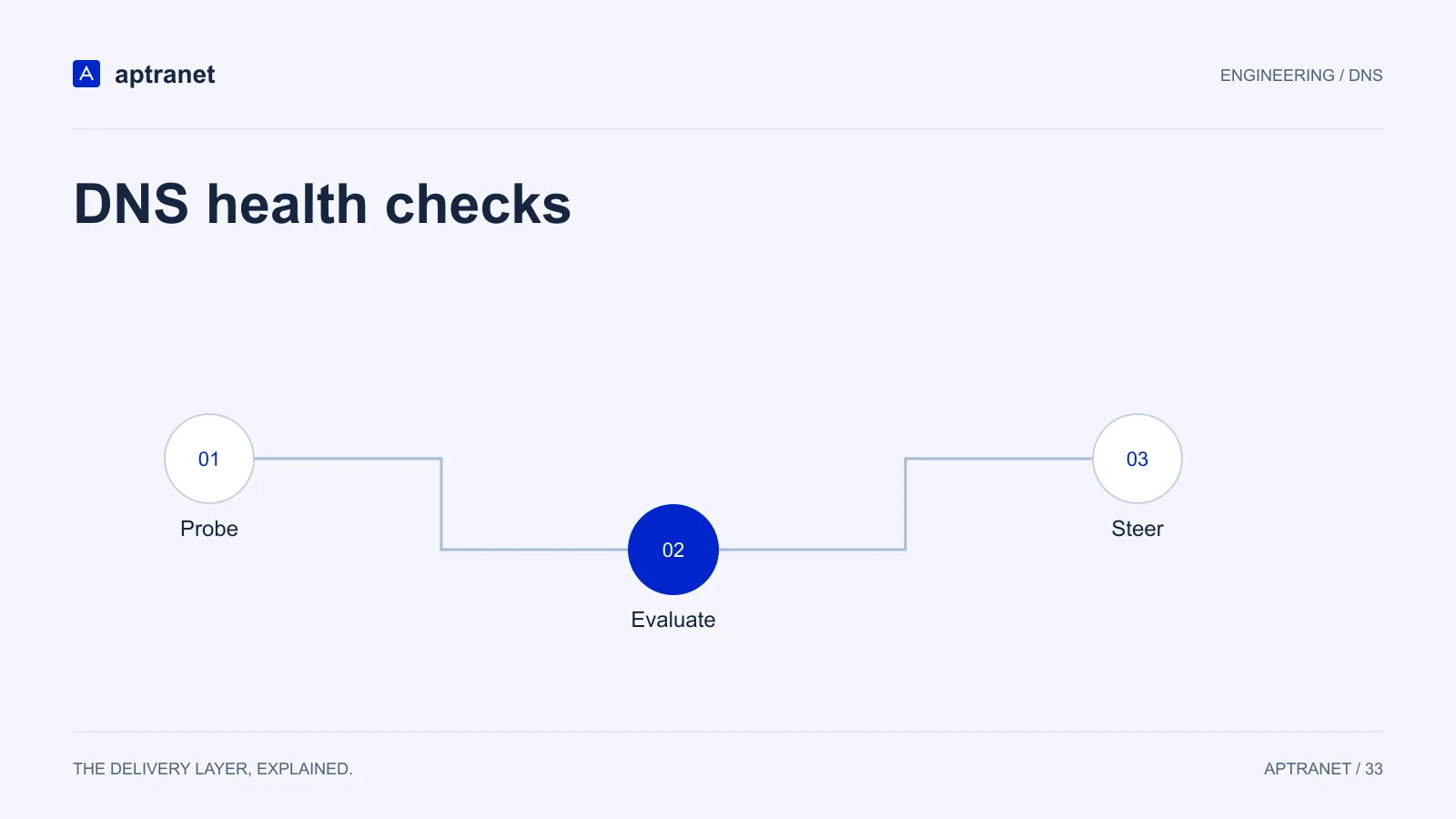
DNS health checks
- 01ProbeCheck the relevant endpoint and expected response.
- 02EvaluateApply failure and recovery thresholds.
- 03SteerUpdate the eligible DNS answer set.
Policy honours health
GeoDNS and weighted pools should exclude unhealthy endpoints automatically. A nearby region that is down is not nearby in any useful sense.
Alert anyway
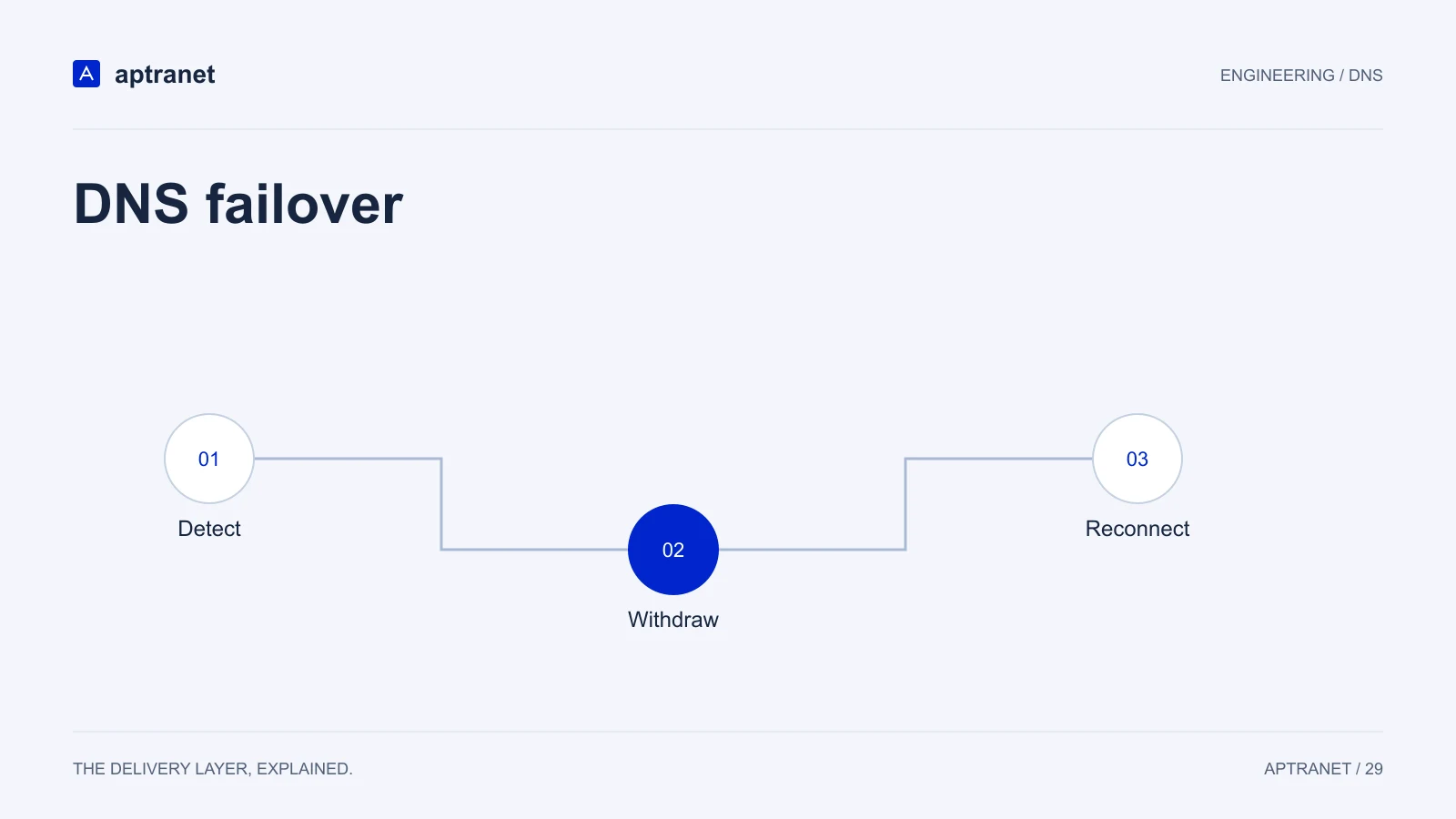
DNS failover is not a substitute for knowing a region is down. Health checks decide answers. APM explains why.
Avoid flaps
Set sensitivity so a single blip does not churn records. Rehearse failure in staging until the DNS graph is validated.
Validate before production
Test a dependency failure that still returns an HTTP response, a complete timeout, and recovery. Verify the expected host header and TLS name. Review how multiple probe locations vote and what happens if the monitoring system itself loses reachability.
- Record the configuration and expected result before changing traffic.
- Keep evidence of the test and a working rollback for the previous behavior.