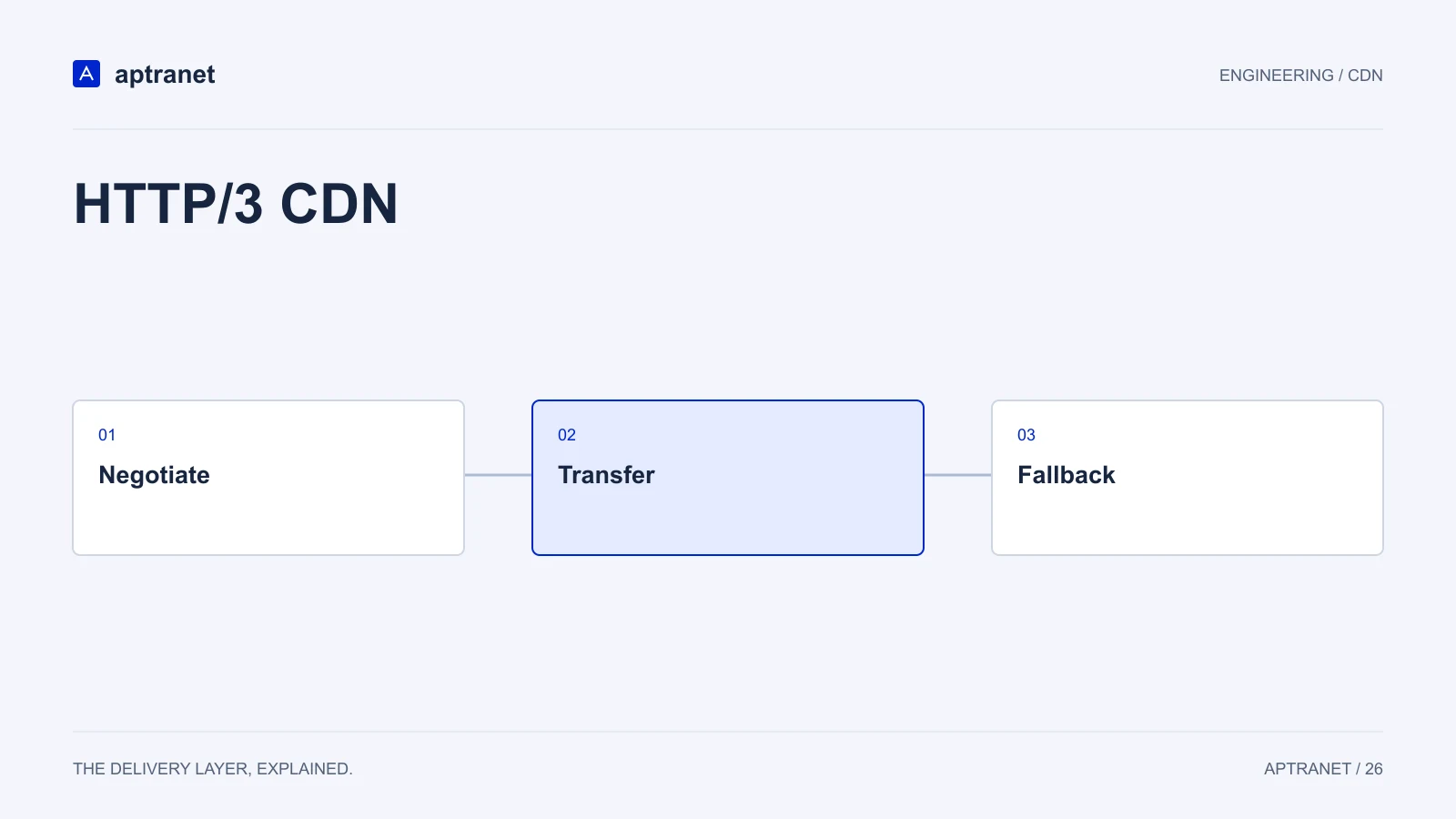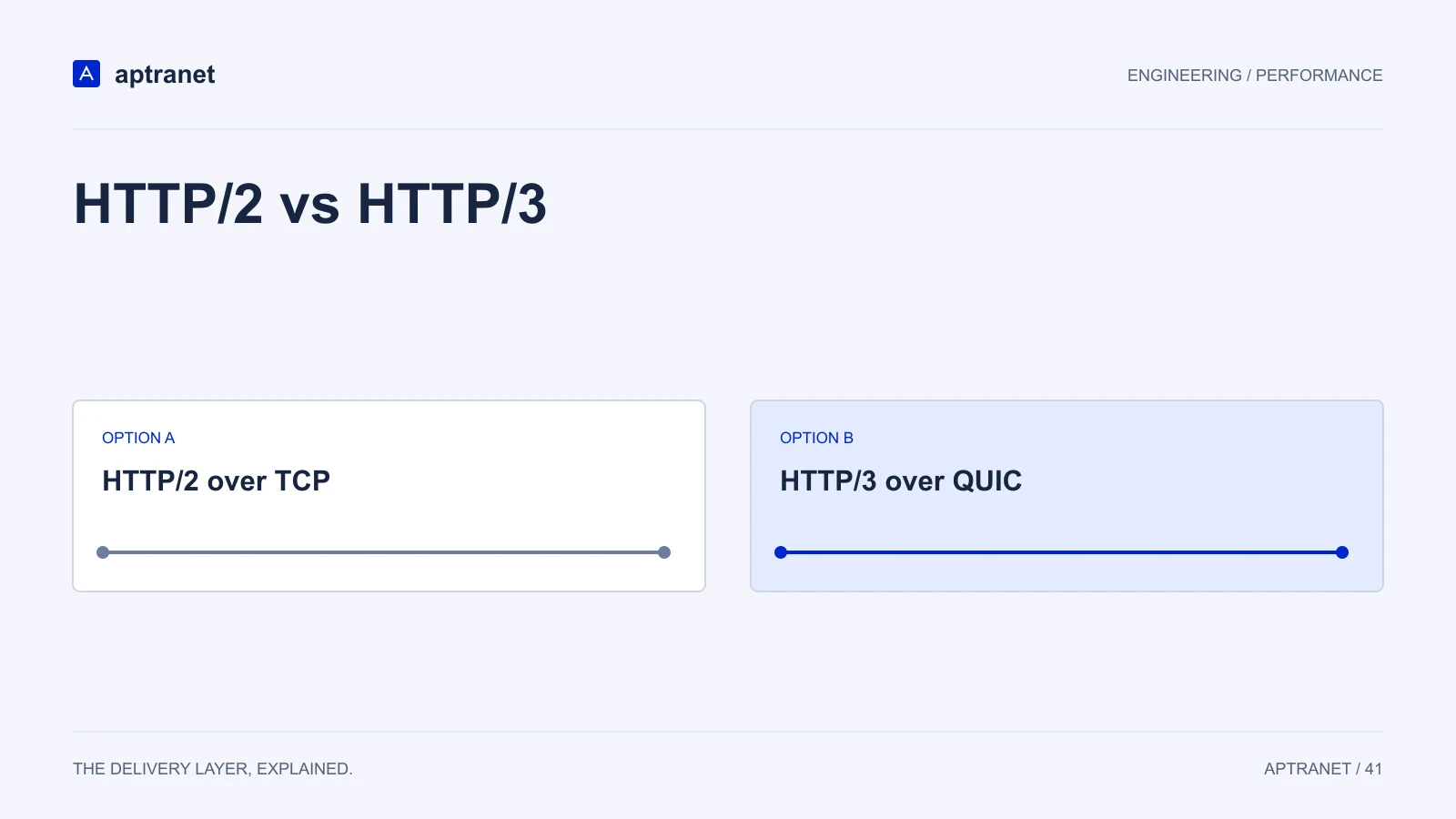
HTTP/2 uses TCP; HTTP/3 maps HTTP onto QUIC. Both multiplex requests, but they handle transport loss and connection establishment differently.
Multiplexing versus handshake
HTTP/2 multiplexes streams over one TCP connection. Loss still head-of-line blocks at the TCP layer. HTTP/3 on QUIC reduces that and shortens handshakes with TLS 1.3.
The delivery model
HTTP/2 vs HTTP/3
- 01HTTP/2HTTP streams share a TCP connection.
- 02HTTP/3HTTP streams use QUIC over UDP.
- 03MeasureCompare actual user paths and keep fallback.
The CDN is where this belongs
The client-to-edge and edge-to-origin protocols are independent. A provider can offer HTTP/3 to the browser while using another supported protocol upstream. Verify the actual negotiated connection.
Do not shard hosts for HTTP/2 reasons
Domain sharding was an HTTP/1.1 trick. On HTTP/2 and HTTP/3 it usually hurts. One hostname on Cloud CDN is enough for assets, fonts and HTML.
Measure the waterfall, not the badge
DevTools protocol badges are not the goal. TTFB and LCP from the markets you sell to are.
Validate before production
Measure first and repeat navigations separately, including realistic packet loss. Confirm the client actually negotiated the intended protocol. Connection-level flow control and congestion still apply to QUIC, so independent streams do not make loss cost-free.
- Record the configuration and expected result before changing traffic.
- Keep evidence of the test and a working rollback for the previous behavior.