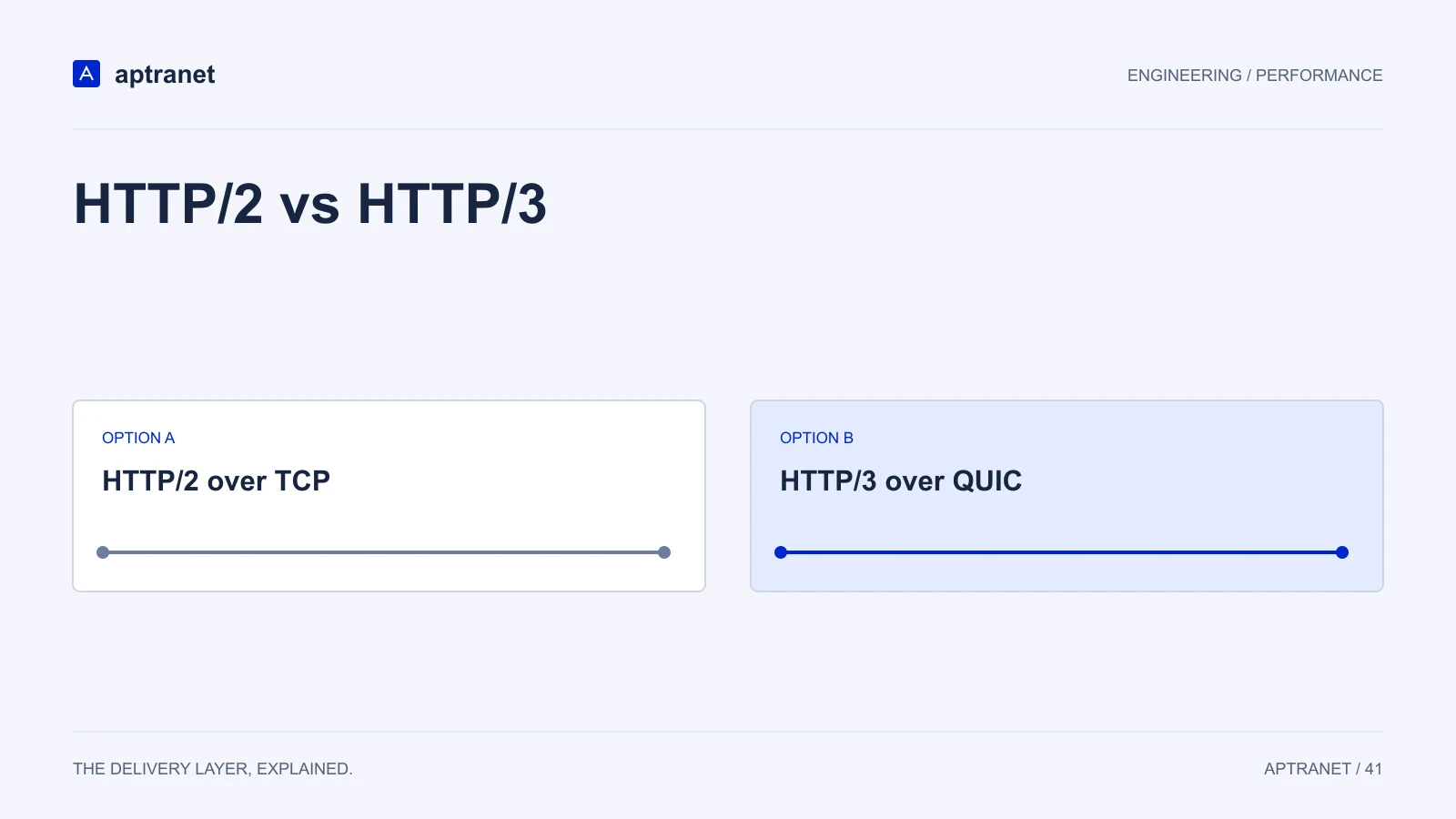
HTTP/3 changes transport between the client and the edge; the edge-to-origin connection is a separate choice.
Edge protocol is not origin protocol
Cloud CDN offers HTTP/3 and HTTP/2 to clients, with TLS 1.3 and 0-RTT. Origin pull is independent. You do not have to rebuild the app server to advertise h3.
The delivery model
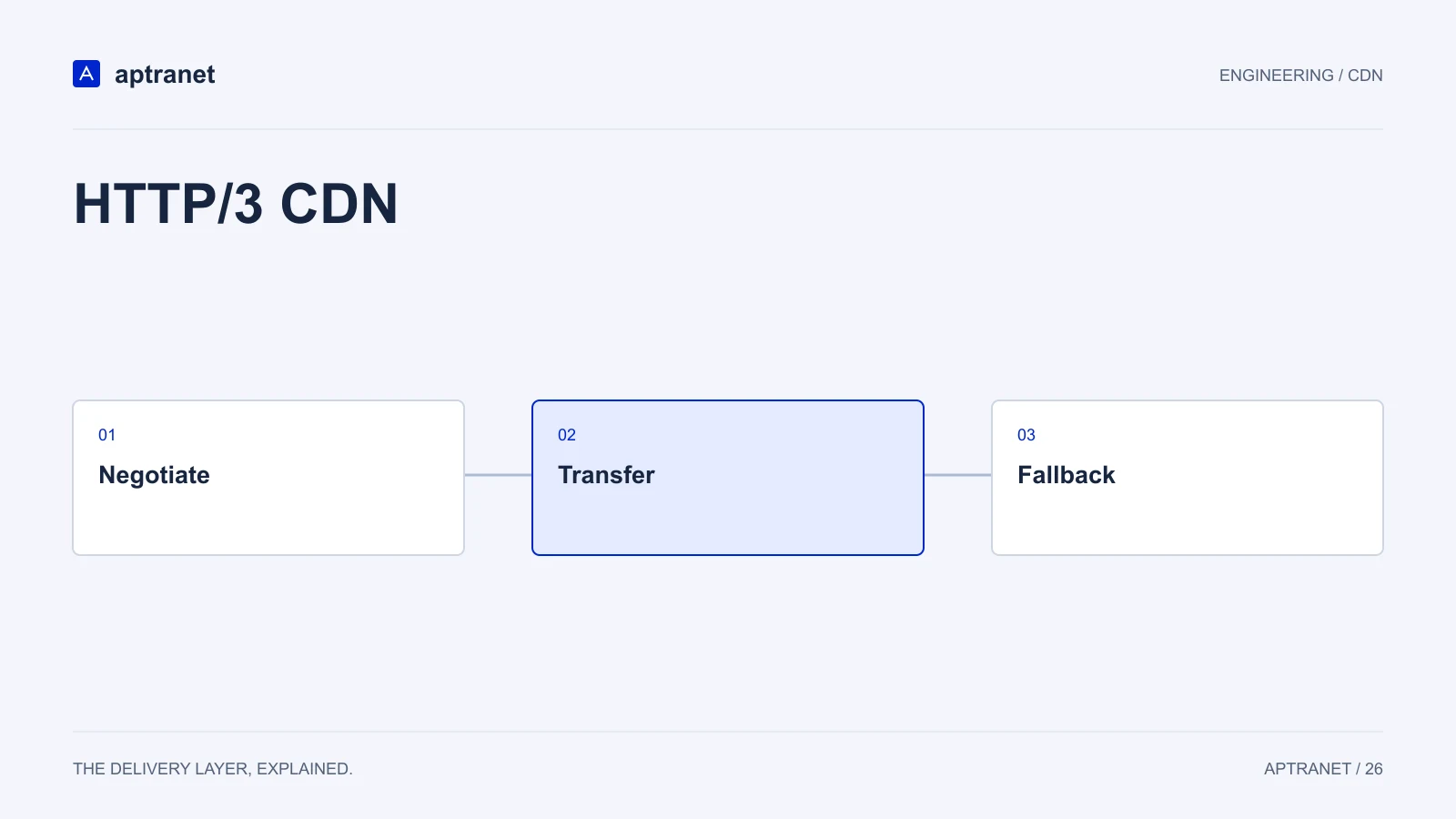
HTTP/3 CDN
- 01NegotiateThe client discovers an available HTTP/3 endpoint.
- 02TransferHTTP streams use QUIC over UDP.
- 03FallbackClients use another supported protocol when needed.
Where users notice
Mobile networks, long RTTs and asset waterfalls (fonts, JS, images). A documentation site with twenty small files benefits more than a single large download that is already one connection.
Fallback is required
Some networks block UDP. Browsers fall back to HTTP/2 over TCP on the same hostname. If QUIC is blocked, the site still loads.
Turn it on by putting the site on Cloud CDN
HTTP/3 is part of the delivery path, not a second hostname you remember in one region and forget in another.
Validate before production
Confirm the negotiated protocol in browser network diagnostics, then compare repeated tests under representative loss and latency. Retain a working TCP-based fallback. A protocol badge alone is not evidence of a faster page.
- Record the configuration and expected result before changing traffic.
- Keep evidence of the test and a working rollback for the previous behavior.