GET does not automatically mean shareable. Cache an API response only when identity, permissions, and representation are fully accounted for.
Mark the safe GETs
Catalogue, published CMS content, feature flags that are global, and OpenAPI docs are typical. Set a TTL that matches how wrong a stale answer can be, plus purge from the publish pipeline.
The delivery model
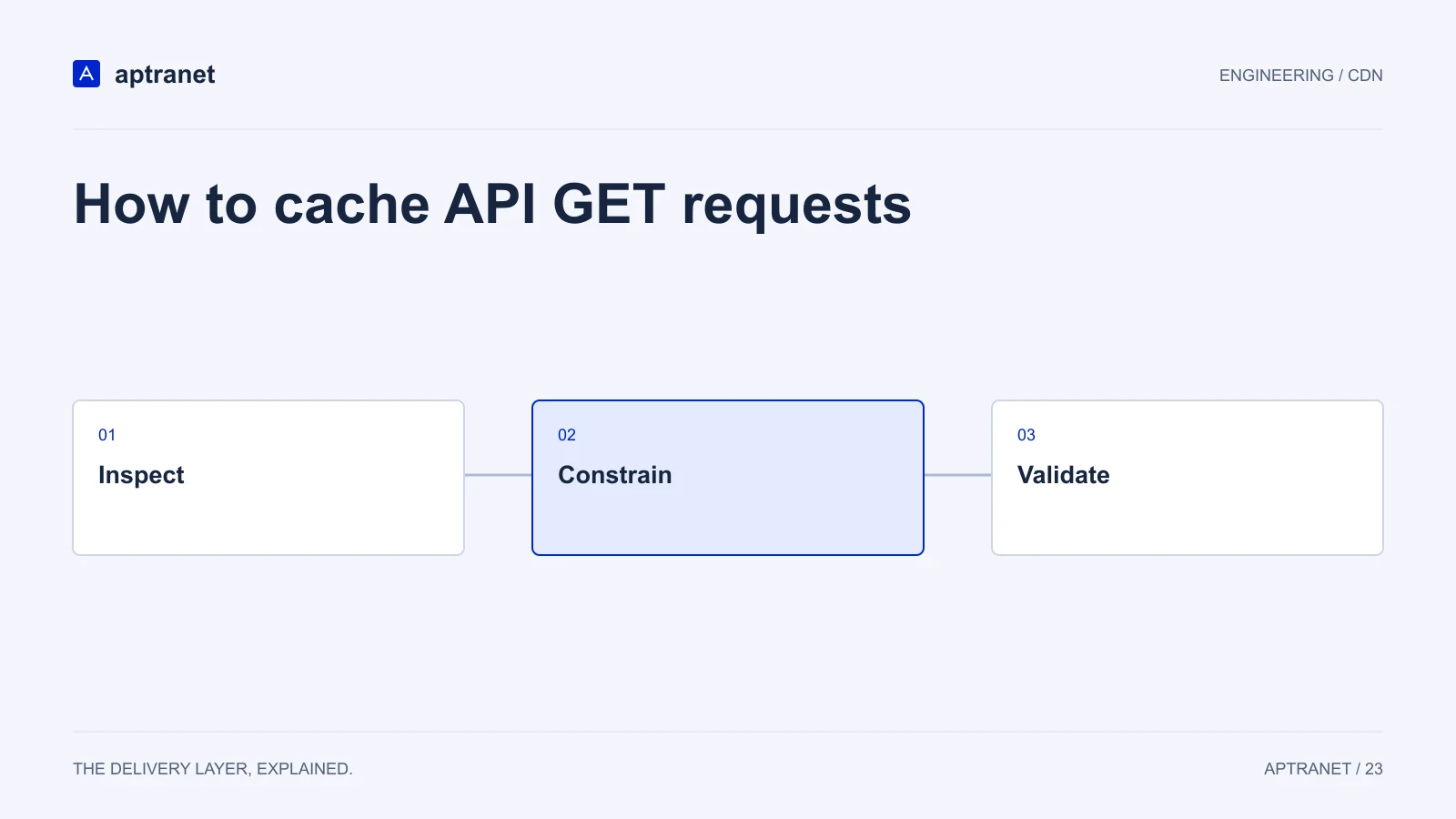
How to cache API GET requests
- 01InspectIdentify inputs that can change the response.
- 02ConstrainUse an explicit public cache policy or bypass.
- 03ValidateTest freshness and isolation across identities.
Bypass the rest
POST, PATCH, PUT, DELETE, and any GET that varies on Authorization or cookies. GraphQL POSTs usually bypass unless you have persisted public GET queries you fully control.
Shield and short TTLs
APIs with 15-60 second TTLs create regular miss storms. Origin Shield is how a small API cluster survives that pattern.
Tokens for private GETs
If a GET is cacheable for a cohort but not the world, token authentication can gate the cached object. Application auth still owns entitlements.
Validate before production
Request the same endpoint anonymously and with two different credentials. Compare bodies, cache status, query variants, and invalidation behavior. Default to bypass for personalized data; only enable sharing after the endpoint’s contract makes it safe.
- Record the configuration and expected result before changing traffic.
- Keep evidence of the test and a working rollback for the previous behavior.