A shield adds an upstream cache tier that can reduce origin fetches when several edges need the same object.
Hits stay local, misses get a single path
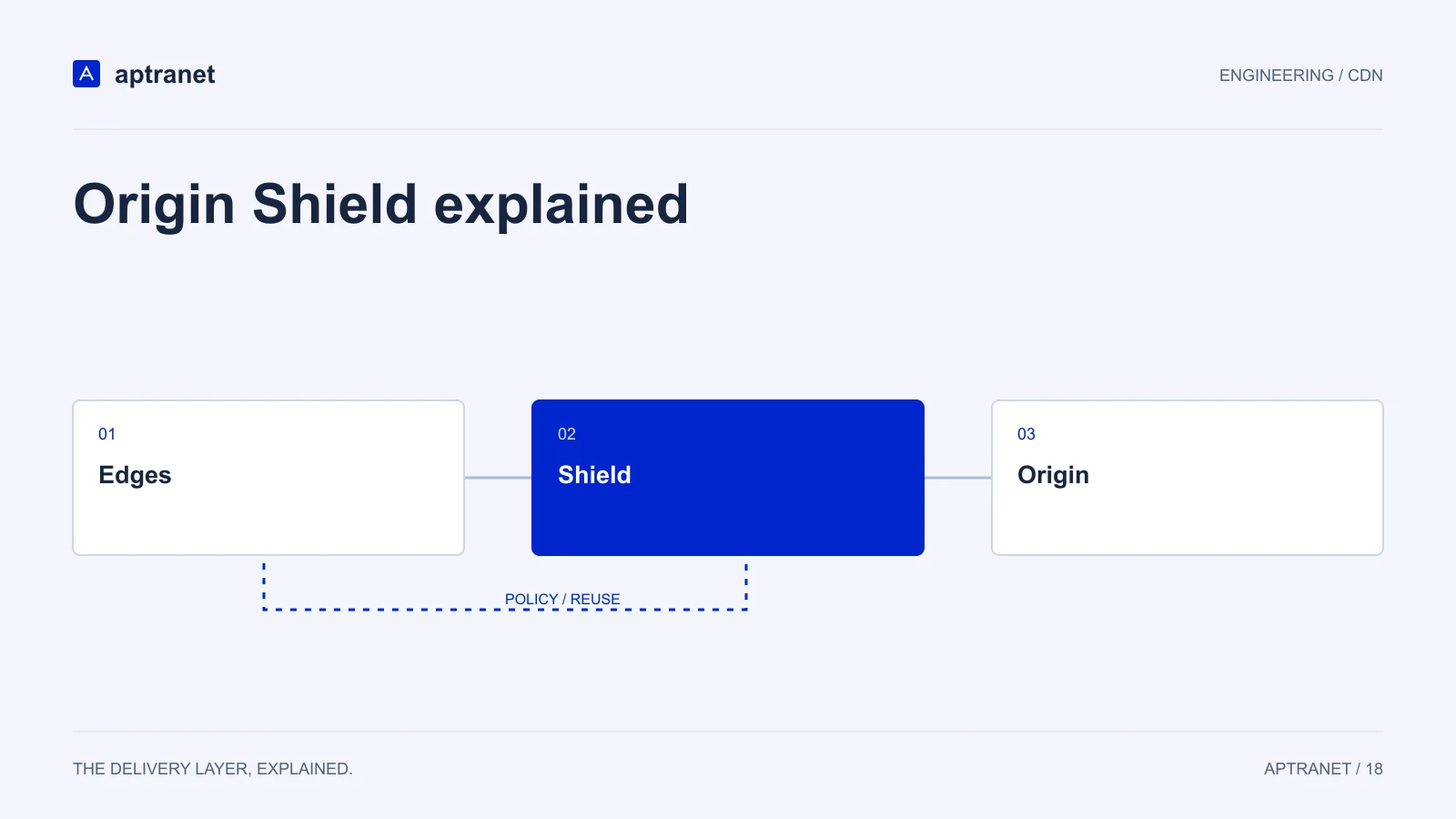
An edge miss can continue through a shield before reaching origin. Reuse and coalescing depend on cache eligibility, key alignment, and the provider implementation.
That is the difference between a cache and a well-behaved cache.
The delivery model
Origin Shield explained
- 01EdgesMultiple serving caches request an object.
- 02ShieldAn intermediate tier can reuse a fill for eligible requests.
- 03OriginReceives the remaining upstream fetches.
When it matters most
After a purge, after a deploy, at the start of a live event, and whenever HTML TTLs are short. APIs with a 30-second TTL are a classic shield workload.
Large files and video segments also benefit: first-byte to origin should not multiply by PoP count.
Origin groups
Shield sits with origin groups: more than one origin on a distribution for failover or path-based routing. Visitors still never aim at those origins if you restrict access.
Serve-stale is the other half
If origin is down, eligible stale objects can still be served. Shield reduces how often you need that; serve-stale is the belt.
Validate before production
Use a controlled cold-cache test on a dedicated resource and compare edge misses with actual origin requests. Confirm the provider’s request-coalescing behavior and test stale handling separately; a shield does not make every miss disappear.
- Record the configuration and expected result before changing traffic.
- Keep evidence of the test and a working rollback for the previous behavior.