A second CDN adds a delivery option and another configuration surface. It helps only when steering, origin policy, and application behavior work across both.
Do the first CDN properly
Origin restriction, purge in CI, TLS, bypass rules and a rehearsal hostname. If that is not true, a second vendor duplicates confusion.
The delivery model
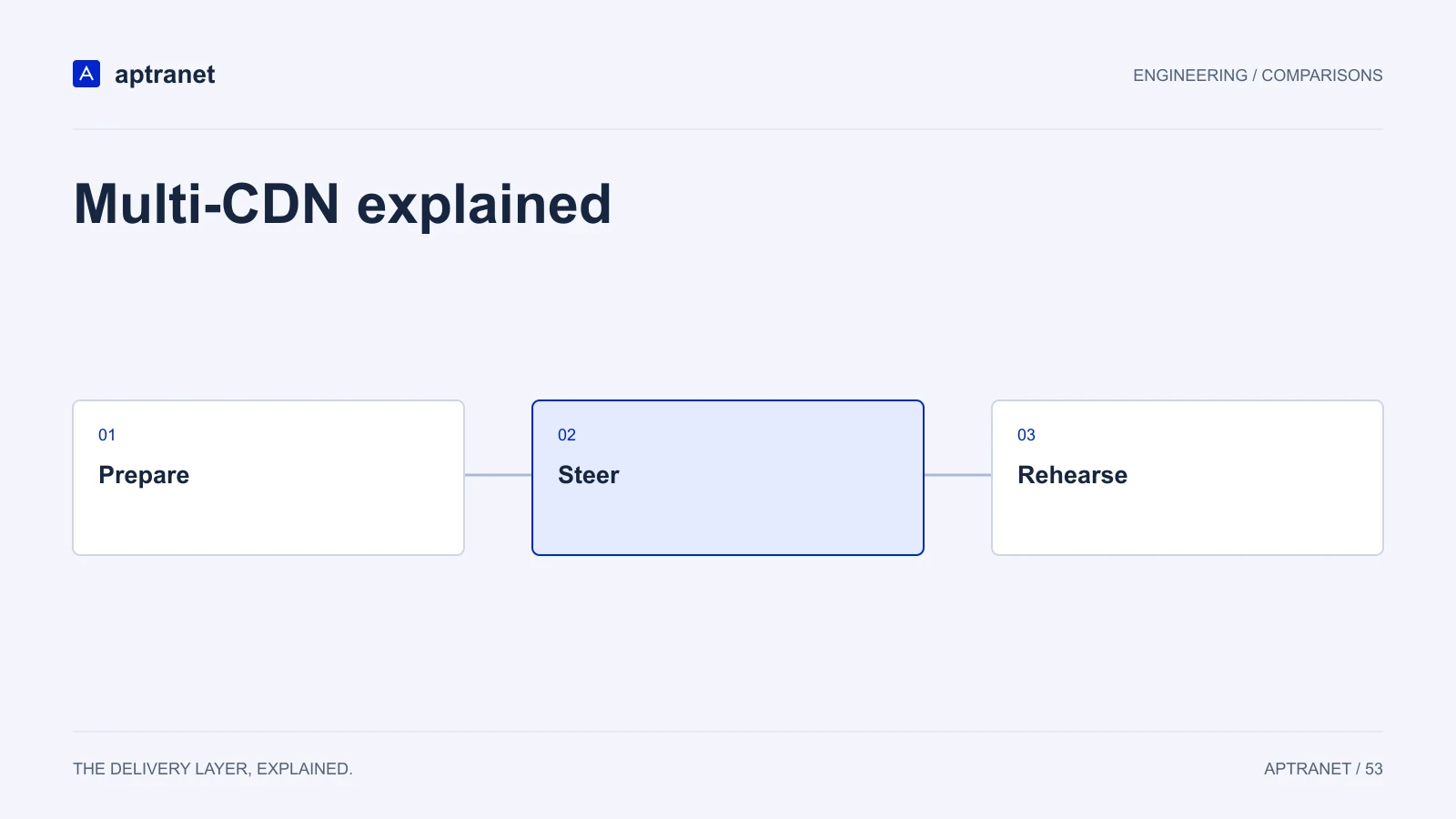
Multi-CDN explained
- 01PrepareMake both delivery paths independently usable.
- 02SteerSelect a healthy path with a defined policy.
- 03RehearseTest switching and consistent content updates.
What a second path is for
Vendor failure domains, regional coverage gaps, or contractual dual-source. DNS (Cloud DNS weights or failover) is how clients choose a path.
Origin must allow every puller
Firewall rules that only allow one CDN will turn the second CDN into an outage. Token and logging stories multiply too.
Aptranet as one of the paths
Cloud CDN can be the only CDN or one path in a multi-CDN design. Origin Shield still helps on the Aptranet miss path.
Validate before production
Run the same cache, TLS, signed URL, and invalidation checks on each provider. Switch a staging hostname while preserving session behavior. Verify that shared DNS, origin, and certificate dependencies do not undermine the intended redundancy.
- Record the configuration and expected result before changing traffic.
- Keep evidence of the test and a working rollback for the previous behavior.