A storefront can reuse public assets while cart, checkout, and account responses remain isolated by session.
What is safe to cache
Theme assets, product galleries, category pages and anonymous product HTML are shareable. They are also the majority of requests during a campaign.
Serving eligible storefront objects from a shared cache can reduce repeat origin work. A shield may reduce duplicate fills; verify the effect using origin logs.
The delivery model
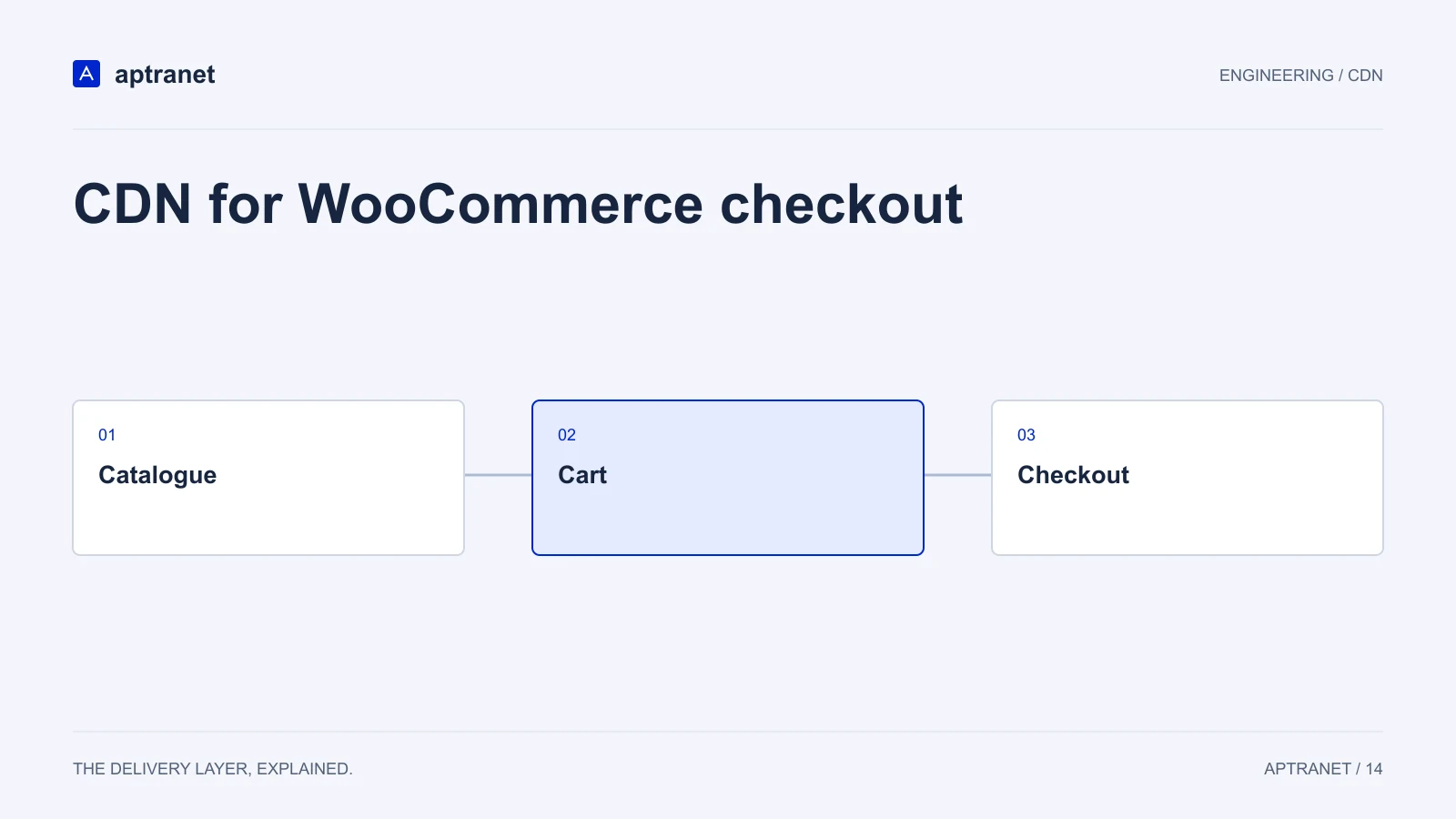
CDN for WooCommerce checkout
- 01CatalogueCache only public representations with a clear update policy.
- 02CartBypass requests carrying customer state.
- 03CheckoutKeep payment and order flows on the application path.
What must bypass
cart, checkout, my-account, add-to-cart query strings and anything that prints a cart fragment for a specific shopper. If those land in cache, you will show the wrong count or an empty basket.
Validate with a real test order on the Aptranet hostname before DNS cutover.
Stock and price changes
If availability must be instant, purge the product URL when stock changes, or keep a short HTML TTL on product pages and a long TTL on images.
Images rarely need to expire when a price changes. HTML does.
Full-page cache at origin still helps
A WordPress page cache and Cloud CDN stack. The origin cache reduces PHP; the CDN repeats the result worldwide.
Purge both on catalogue updates if both store HTML.
Validate before production
Use two independent browser profiles to add different products to their carts. Complete a test order in the configured payment sandbox. Change a product’s stock and price, then verify every cached catalogue view updates as intended.
- Record the configuration and expected result before changing traffic.
- Keep evidence of the test and a working rollback for the previous behavior.