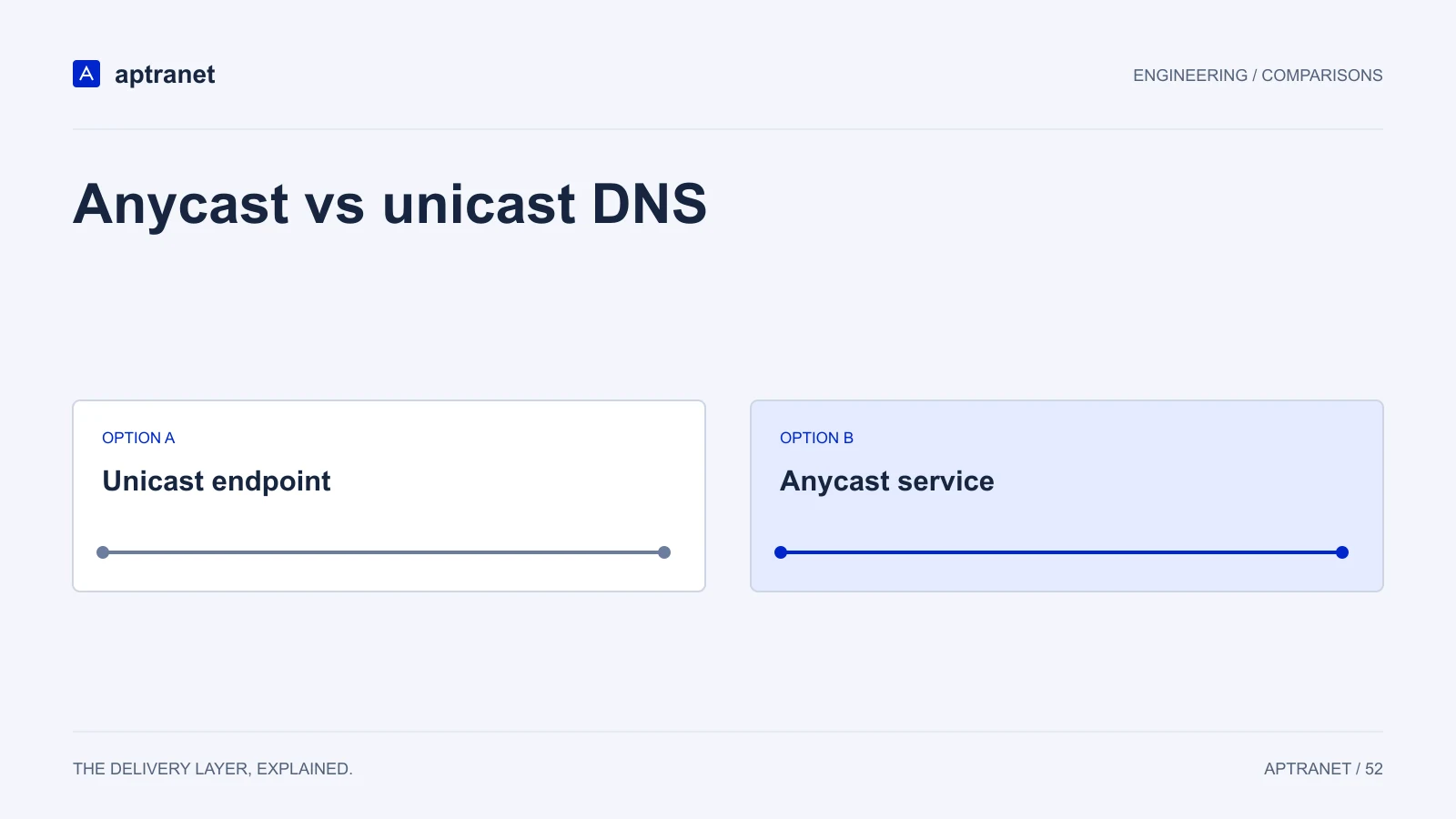
Anycast changes how a service address is reached; unicast assigns an address to a specific destination. Neither label alone proves operational resilience.
Unicast is easy to understand and easy to flood
Resolvers send queries to a specific address. That address has a home. Congestion, maintenance and DDoS all share it.
The delivery model
Anycast vs unicast DNS
- 01UnicastRouting reaches a particular service endpoint.
- 02AnycastRouting selects among shared-address announcements.
- 03OperationsZone consistency and failure handling still matter.
Anycast announces the same service everywhere
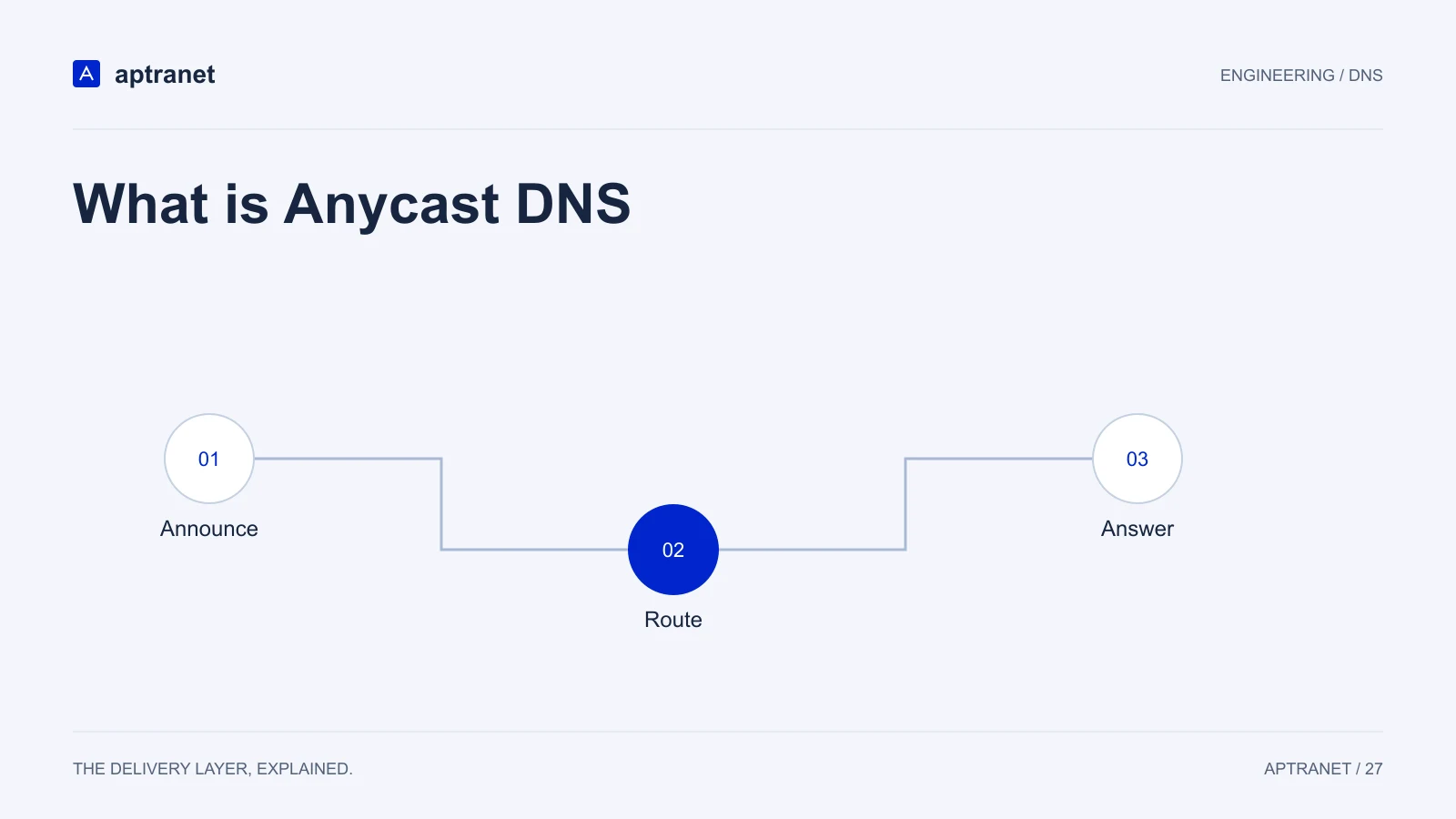
Anycast advertises a shared service address from several locations. Network routing selects among those announcements, and the selected location can change when routing changes.
Features still sit on top
Record policy remains separate from service reachability. Geographic routing, health checks, and TTLs determine answers and cache behavior after a query reaches authority.
You still need two NS names
Registries want more than one nameserver name even when infrastructure is shared. Follow that, then put both on Anycast.
Validate before production
Review physical and network diversity, not just the number of nameservers. Query from multiple networks and inspect authority consistency. Ask how routing withdrawals, partial failures, and DNSSEC signing are managed.
- Record the configuration and expected result before changing traffic.
- Keep evidence of the test and a working rollback for the previous behavior.