A CDN adds an operational layer that can improve reusable content delivery. Its benefit depends on traffic geography, cacheability, and configuration.
Latency
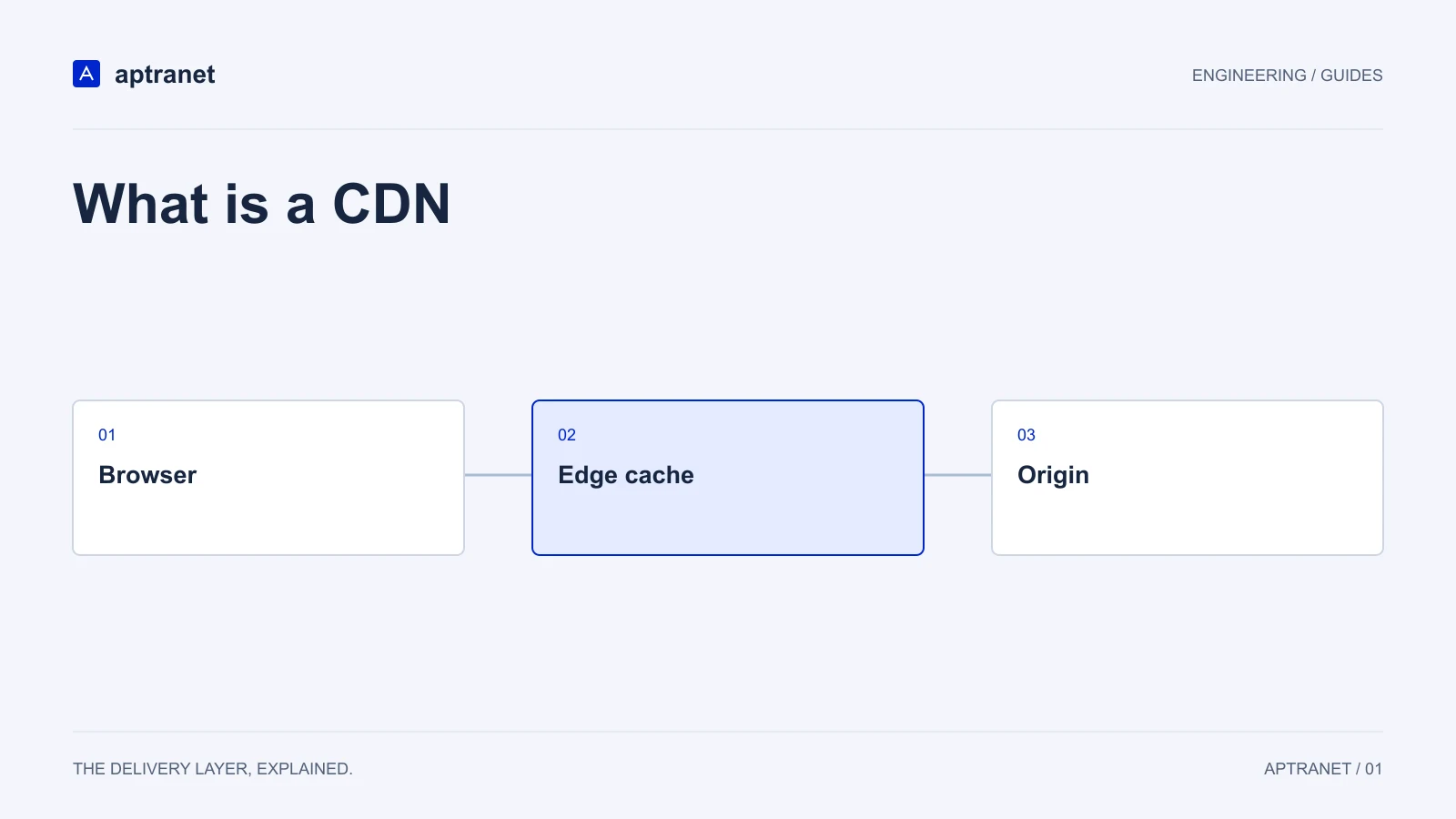
A distant origin can add network travel to a request. A usable edge cache can avoid an origin fetch, but the benefit depends on routing, cache state, and remaining browser work.
The delivery model
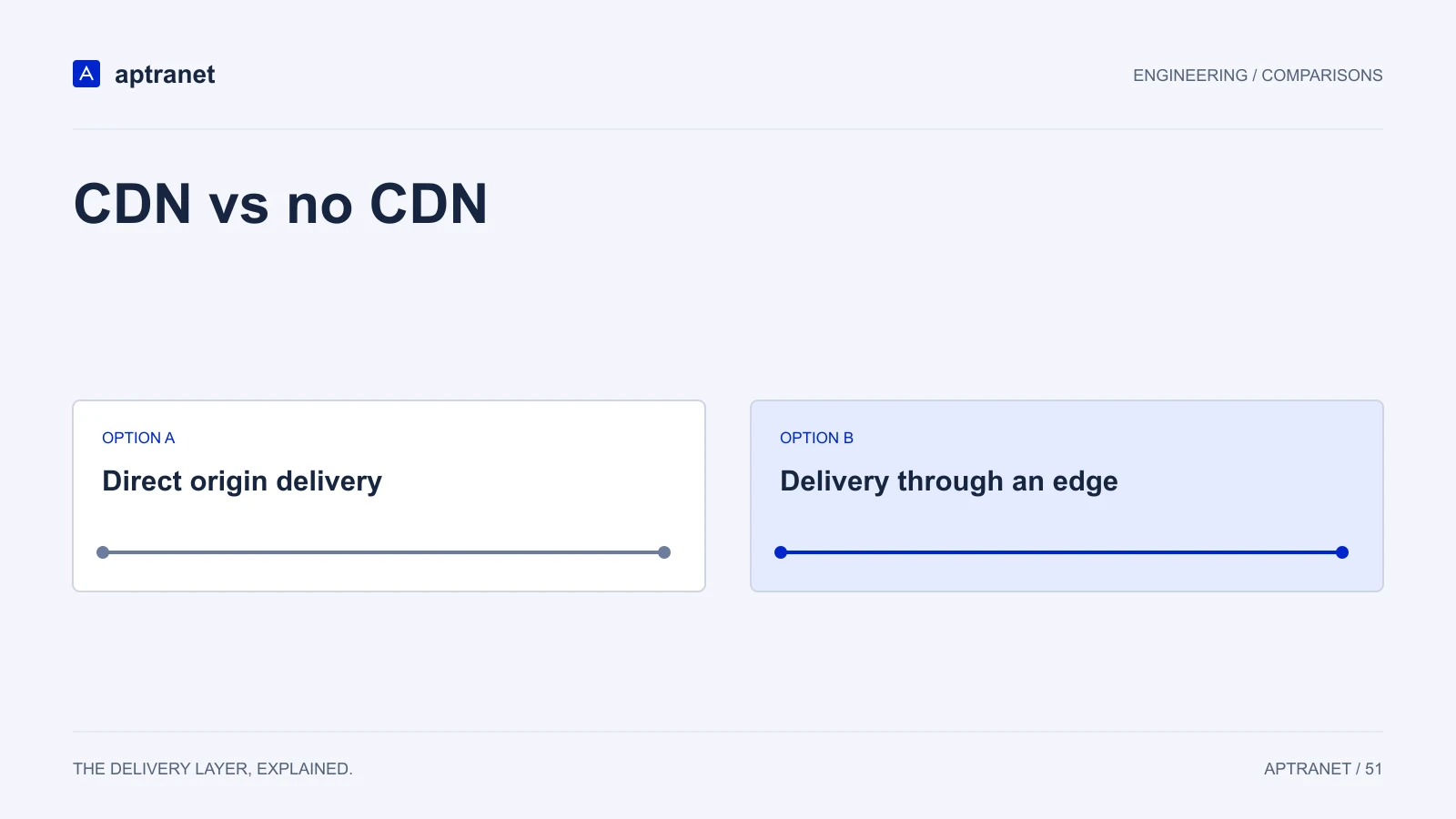
CDN vs no CDN
- 01DirectEach uncached request reaches the origin path.
- 02EdgeEligible responses can be delivered from a serving cache.
- 03DecisionCompare latency, origin work, and operating cost.
Capacity
Caching reusable content can reduce repeat origin requests and transfer. Measure actual request rate, bytes, and application utilization; traffic mix and cache policy determine the result.
Security
A public origin IP is a public target. A distribution with restricted pull is not.
When you might wait
A strictly local intranet app with no public audience may not need a CDN. A public marketing site in one city still benefits from TLS, DDoS absorption and cache, but the geography win is smaller.
Validate before production
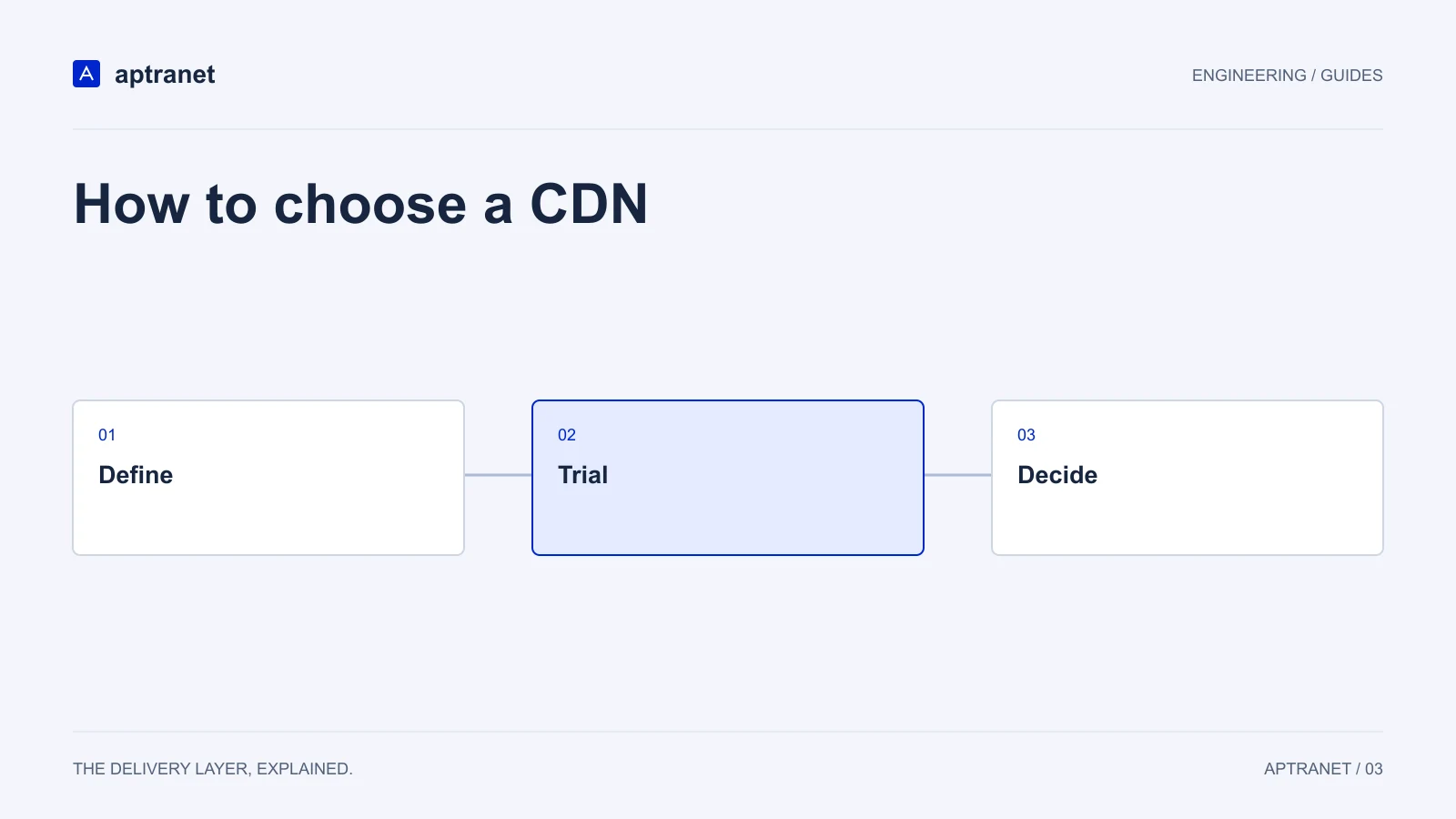
Test equivalent pages through both paths with the same assets and browser profile. Separate cache hits, misses, and uncacheable traffic. Include TLS, invalidation, and rollback effort in the decision rather than evaluating latency alone.
- Record the configuration and expected result before changing traffic.
- Keep evidence of the test and a working rollback for the previous behavior.