Video delivery needs separate policies for manifests, reusable segments, and access decisions.
You deliver, you do not have to transcode
Cloud CDN does not replace your packager. It caches HLS/DASH segments and progressive files, including 4K-ready playback, and shields origin storage from concurrent viewers.
The delivery model
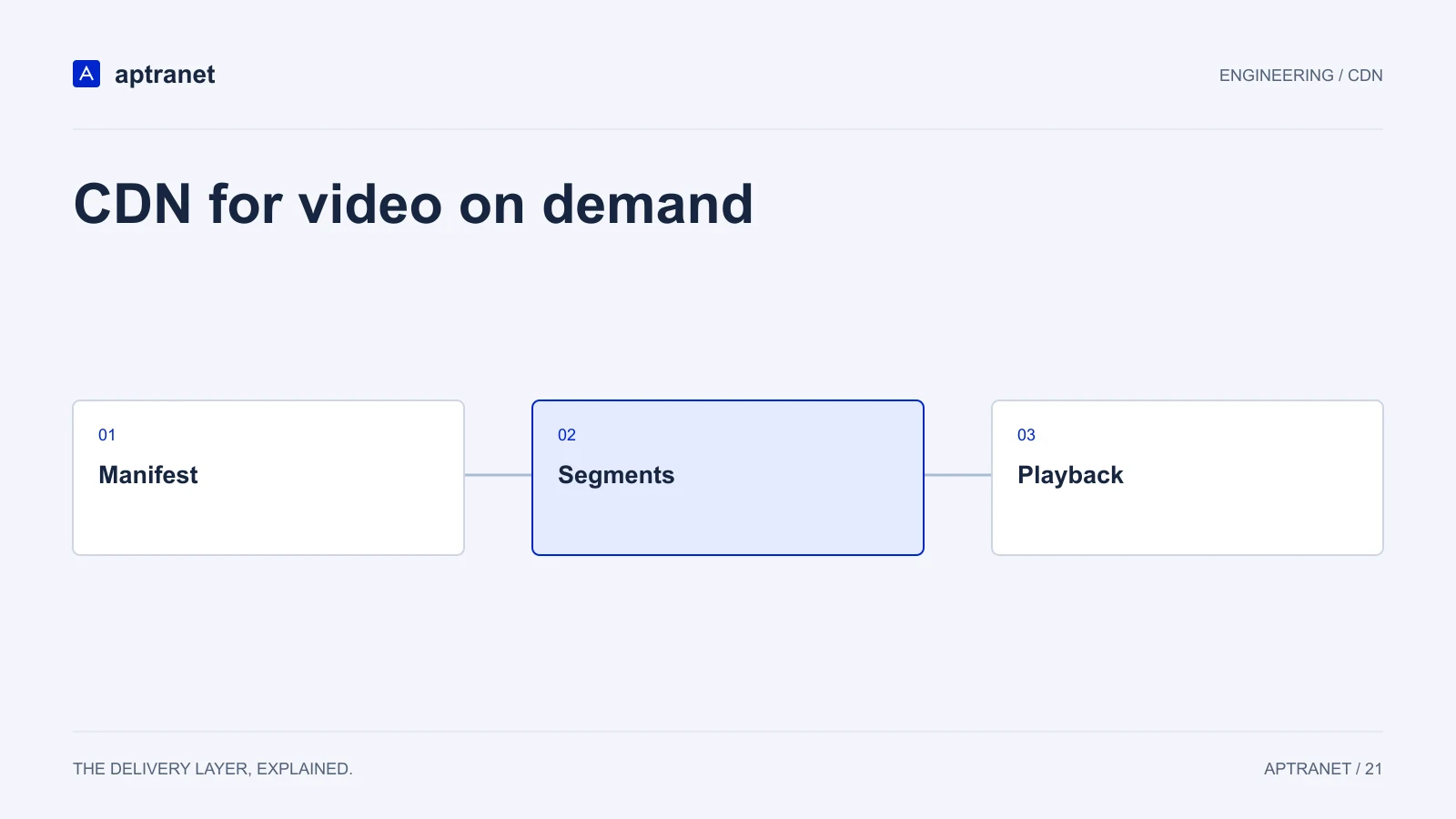
CDN for video on demand
- 01ManifestThe player discovers available renditions and segments.
- 02SegmentsReusable media chunks are fetched through the CDN.
- 03PlaybackThe player adapts to bandwidth and buffer conditions.
Playlists versus segments
Media playlists change more often than segments. Give segments long TTLs. Keep playlist TTLs short enough for the product, and purge when a title is replaced.
The same CDN as the website
Application assets and VOD can share the network. They usually should not share cache keys or bypass rules. Use path policy.
Validate before production
Test initial playback, seeking, a quality switch, and resume from a distant region. If access is protected, verify that authorization covers both playlists and segments and that an expired token fails even when the object is cached.
- Record the configuration and expected result before changing traffic.
- Keep evidence of the test and a working rollback for the previous behavior.