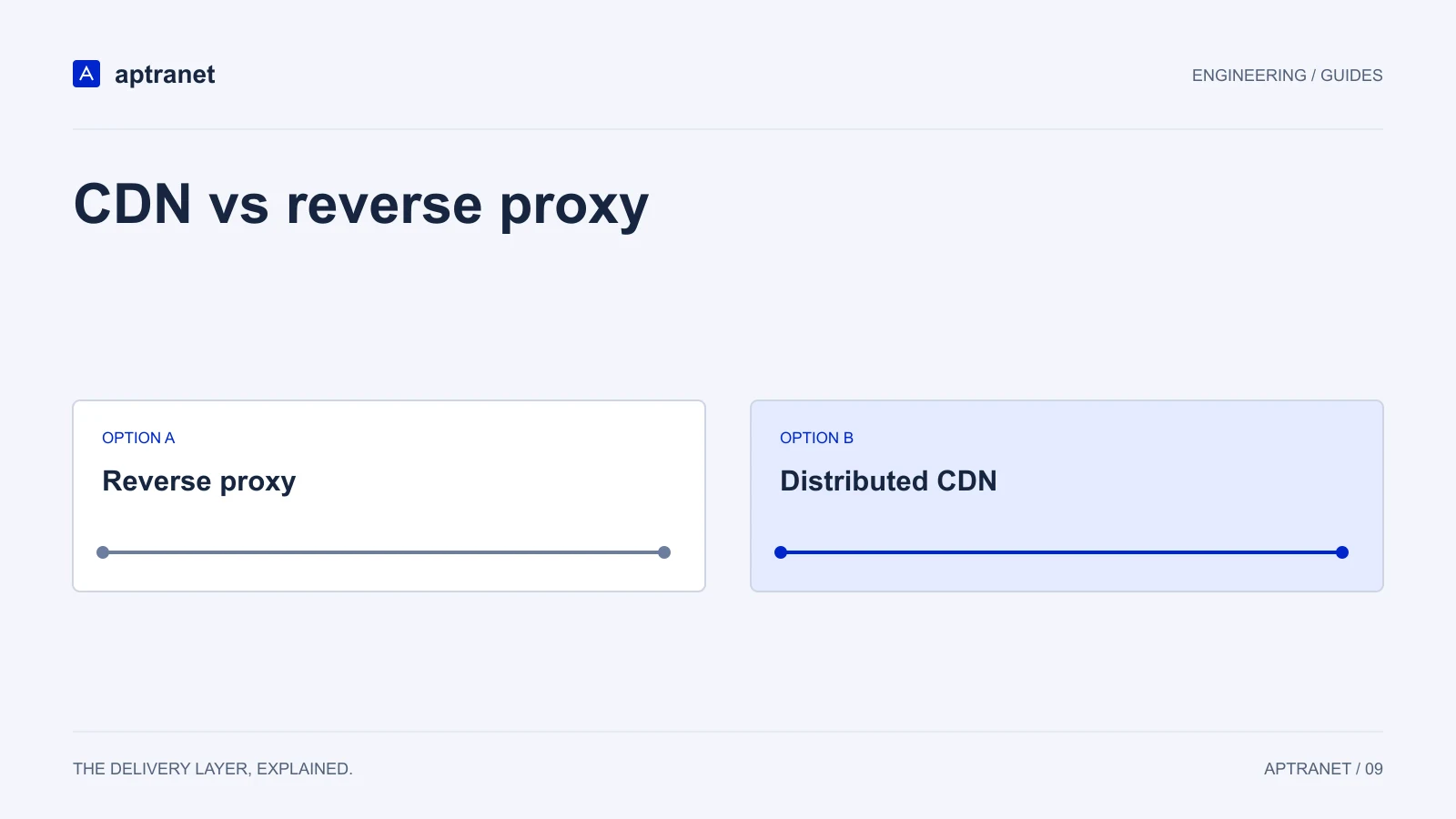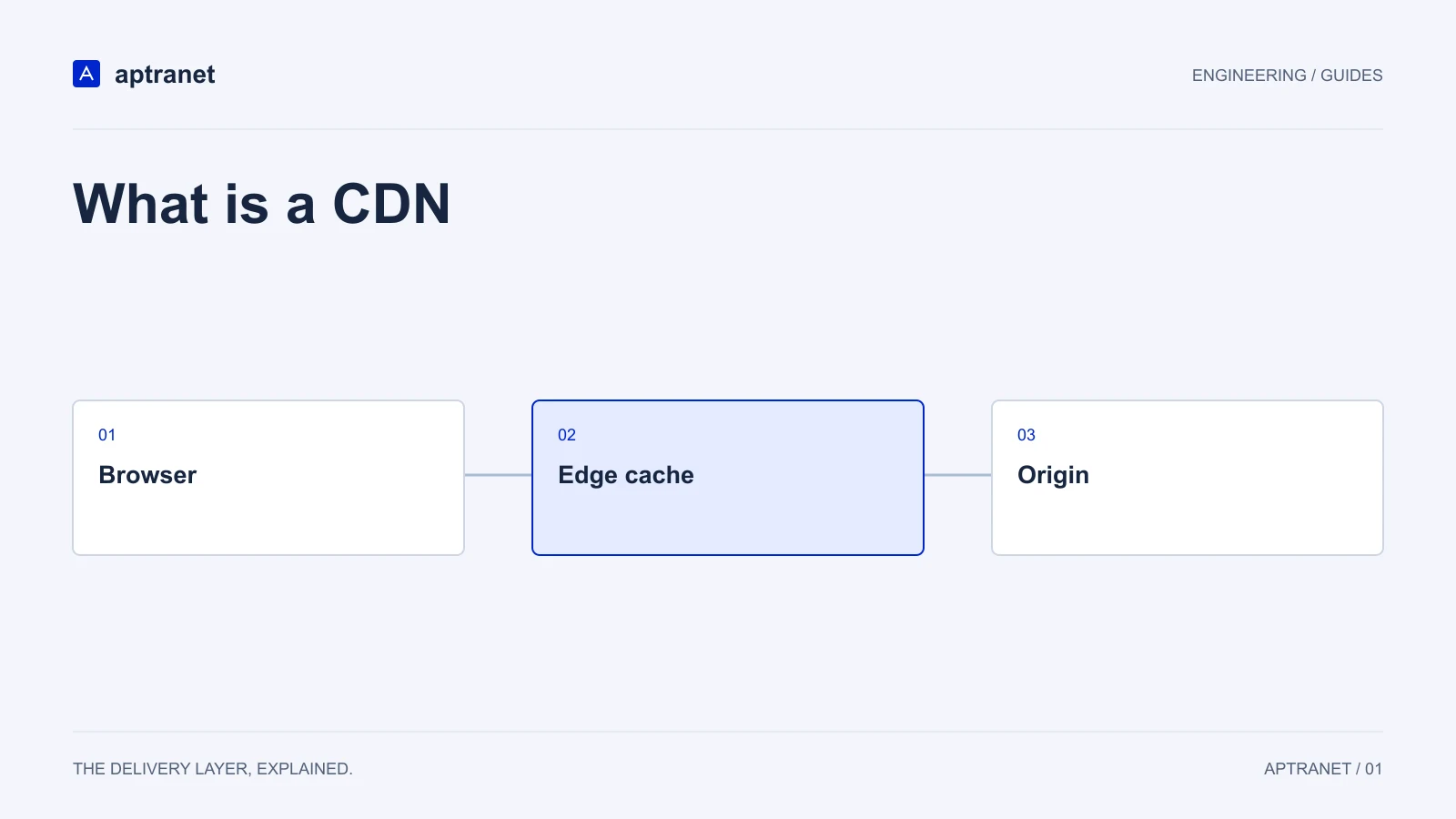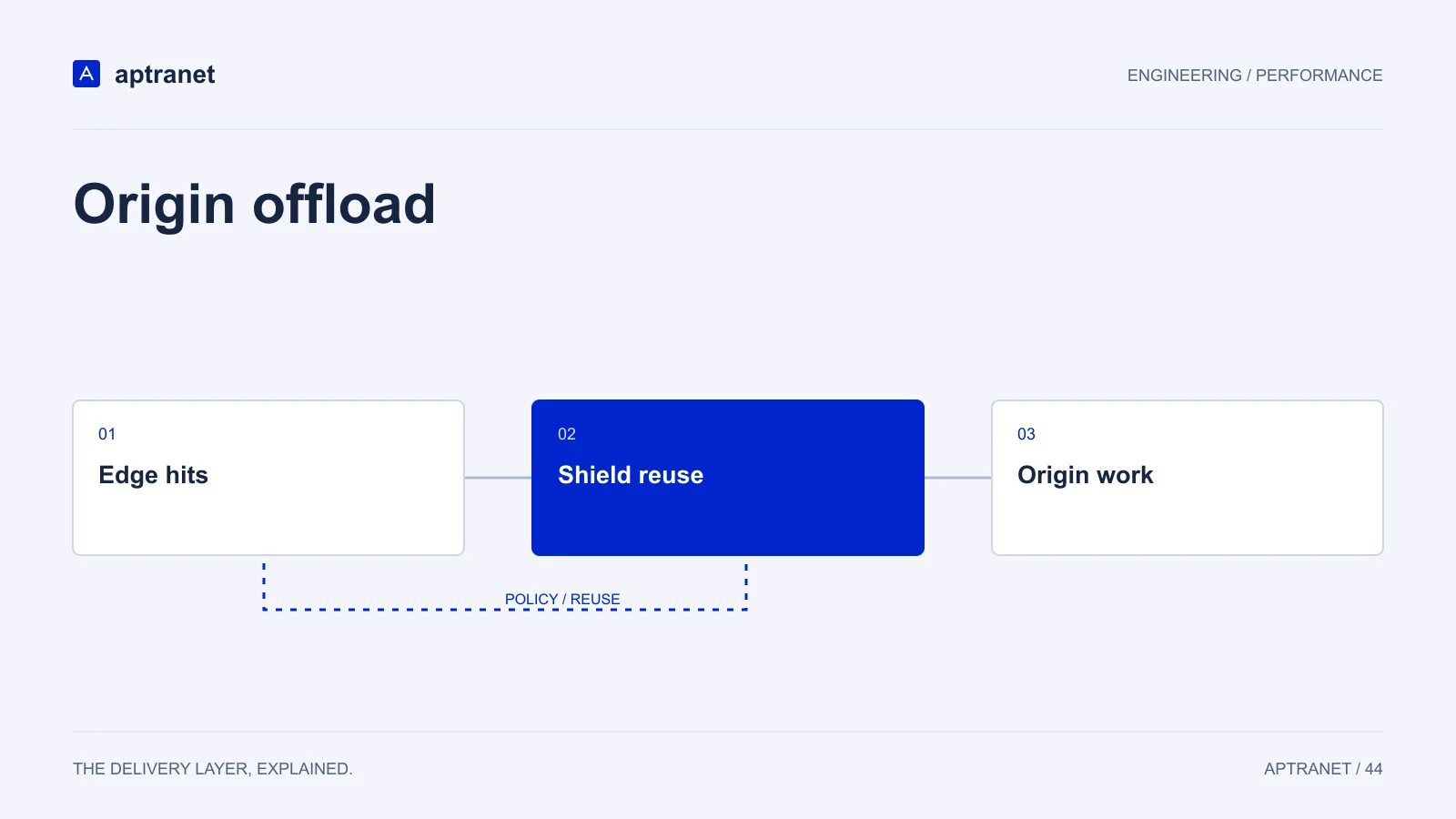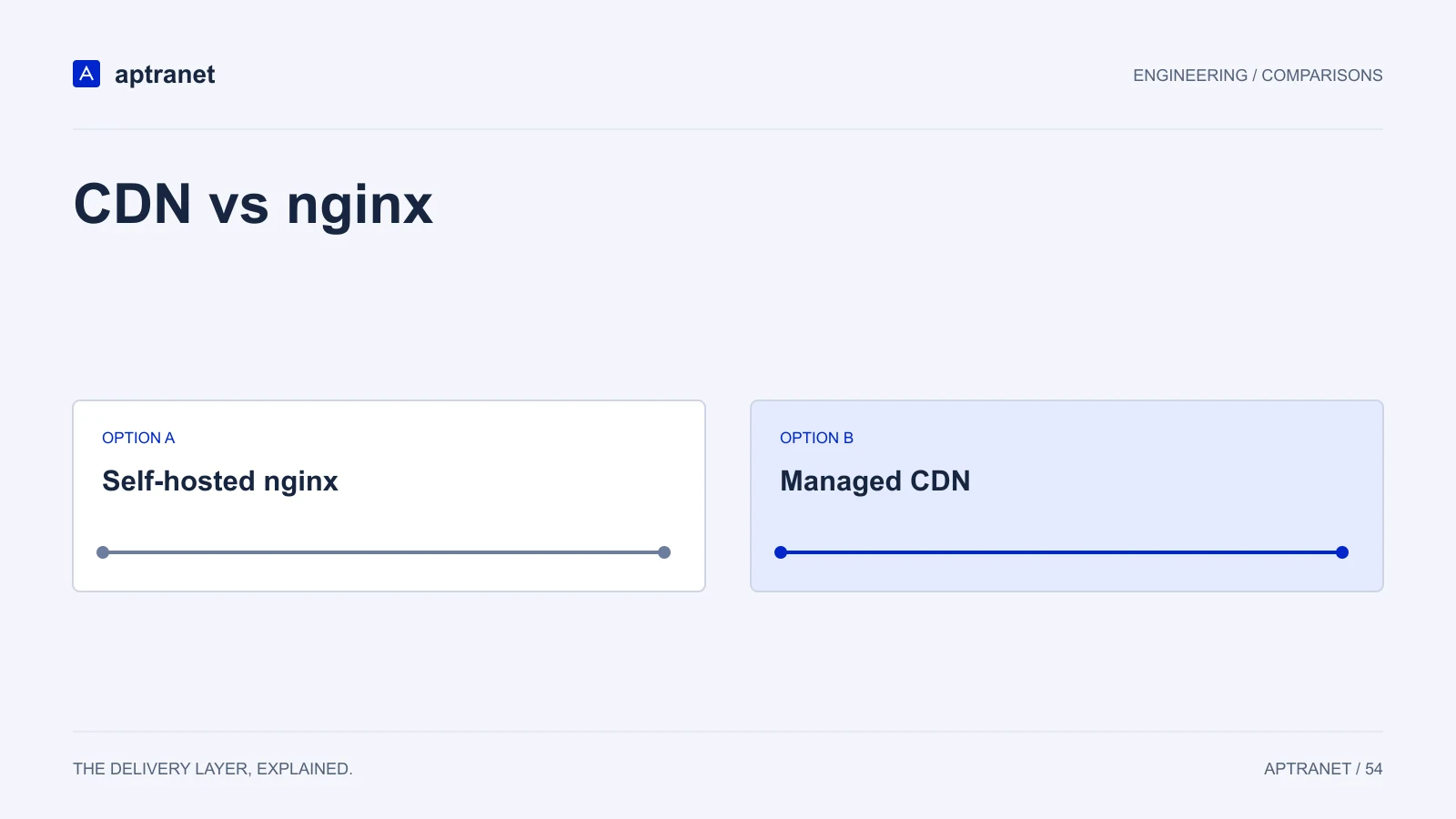
An nginx cache near the application and a distributed CDN solve overlapping but different delivery problems.
Keep nginx next to the app
Routing, internal auth, and application-specific headers can stay on nginx. Cloud CDN sits in front and reduces how often nginx runs for public GETs.
The delivery model
CDN vs nginx
- 01nginxKeep application-specific proxy control near origin.
- 02CDNAdd distributed delivery and provider-managed operations.
- 03TogetherAssign clear cache and invalidation ownership.
What nginx will not give you
Distributed delivery adds regional infrastructure, routing, capacity planning, TLS operations, and observability. Compare the provider service with the infrastructure and ongoing staffing you would otherwise operate.
Double cache needs a boss
If nginx and Cloud CDN both store HTML, pick who purges. Hashed assets can live in both. HTML should have one invalidation owner.
WebSockets and apps
nginx can terminate sockets. Cloud CDN can pass them through on the same public hostname so you do not split cookies and CORS across hosts.
Validate before production
Compare total operating work, including capacity, TLS, logging, patching, regional reach, and incidents. If both layers cache, test freshness after an origin update and after each layer is invalidated independently.
- Record the configuration and expected result before changing traffic.
- Keep evidence of the test and a working rollback for the previous behavior.